

Table of Contents
Introduction
Why do some students succeed while others struggle, even with the same classes?
Many students hear grades, GPA, and test scores but feel confused about what they really mean. If you are new to the U.S. school system, this confusion can grow fast. That is why understanding the definition of academic performance is so important. When you clearly know what academic performance means, you can track your progress and improve with confidence.
So, what is academic performance? And what is academic performance in school terms? Simply put, it describes how well a student meets learning goals through grades, skills, effort, and participation.
In this guide, you will learn the clear definition of academic performance, its meaning, and real examples. You will also see why it matters for college, scholarships, and long-term success. By the end, you will understand how to measure your progress and take smart steps to improve it.
“Track your grades, GPA, and projects easily with our Academic Performance Calculator. Start analyzing your performance today!”
What is academic performance?
The academic performance definition refers to how well a student meets learning goals set by a school or teacher. Educators use this term to describe a student’s overall progress in class. When experts explain the meaning of academic performance, they focus on measurable results and daily learning behaviors.
In simple terms, academic performance includes grades, skills, effort, and growth. U.S. schools, colleges, and education researchers often describe academic performance as the outcomes students achieve through study and participation. So when someone says “academic performance is defined,” they mean the total picture of how a student performs in school.
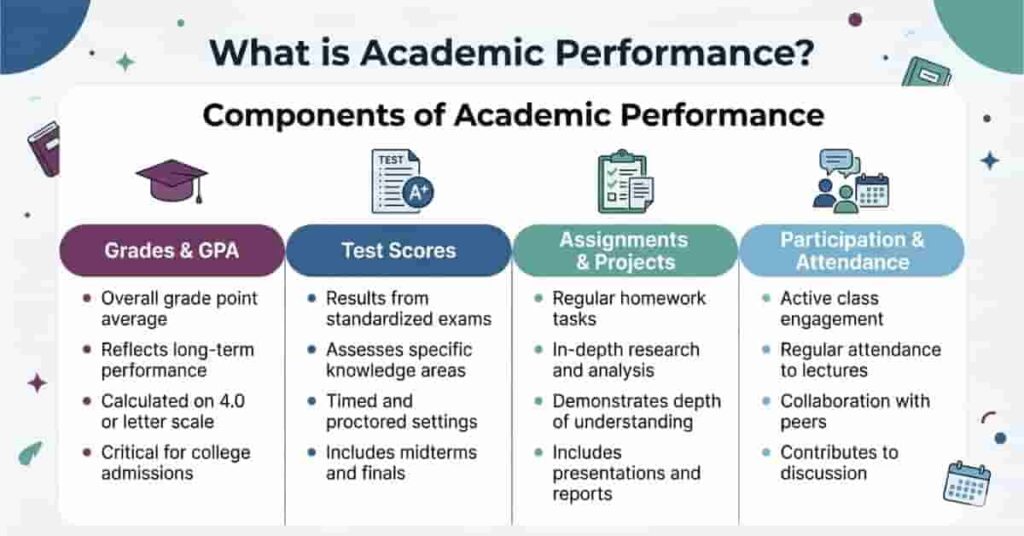
Academic performance has several key dimensions:
- Grades & GPA – Letter grades and grade point average show overall course achievement.
- Test Scores – Quiz, unit test, and standardized test results measure subject understanding.
- Assignments & Projects – Homework, essays, and group projects show applied skills.
- Participation & Attendance – Class involvement and regular attendance reflect effort and consistency.
These parts work together. A high GPA alone does not show the full story. Strong projects, steady attendance, and active participation also matter.
After understanding these dimensions, students can better track progress and set realistic goals.
Takeaways
- Academic performance includes more than just grades.
- Schools measure it through GPA, tests, assignments, and participation.
- Understanding all dimensions helps students improve strategically.
Key Concepts in Academic Performance
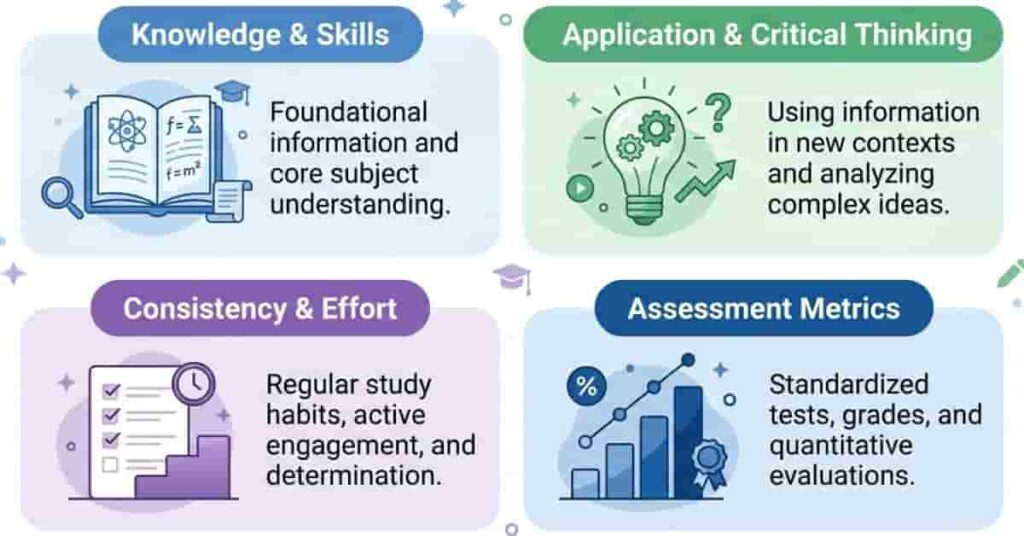
To fully understand the meaning of academic performance, you must look beyond grades. Schools evaluate several core skills and habits. These concepts explain how academic performance is defined in real classrooms across the U.S.
Each concept builds on the others. Together, they shape a student’s overall academic performance.
“Want to see your strengths and areas to improve? Use the Academic Performance Calculator now and take control of your learning journey!”
Knowledge & Skills
Knowledge means understanding facts, ideas, and concepts in each subject. Skills show how well a student uses that knowledge. When educators discuss the definition of academic performance, they often start with mastery of subjects.
For example, math knowledge includes formulas and problem steps. Reading skills include comprehension and vocabulary use. Science requires both facts and lab skills.
Teachers measure mastery through quizzes, homework, and class discussions. Strong knowledge and skills usually lead to better grades and confidence.Students improve mastery by reviewing lessons daily and asking questions early. Small gaps can grow if ignored.
Pro Tip: Focus on weak topics each week rather than just reviewing what feels easy.
Application & Critical Thinking
Memorizing facts is not enough. Schools also test how students apply what they learn. Application and critical thinking are key parts of academic performance defined in modern education.Application means using knowledge to solve real problems. Critical thinking means analyzing, comparing, and making smart decisions.
For example, a history test may ask you to explain the causes of an event. A science project may require designing an experiment. These tasks measure deeper learning.
Teachers value students who can explain their reasoning clearly. Colleges also look for strong thinking skills.
Pro Tip: Practice explaining answers out loud. Teaching a concept helps you understand it better.
Consistency & Effort
Academic performance, which also includes daily habits. Consistency and effort often predict long-term success more than one big test. Attendance plays a major role. Missing classes leads to gaps in understanding. Participation shows engagement and interest. Completing assignments on time reflects responsibility. Teachers notice steady effort, even if scores start low; consistent improvement matters.
Students who build routines often see stronger results. Simple habits, such as scheduled study time, can improve outcomes.
Pro Tip: Track homework and deadlines in one planner or digital app.
Assessment Metrics
Schools use assessment metrics to clearly measure academic performance. These metrics make academic performance measurable and comparable.
Common assessment tools include:
- Unit tests and quizzes
- Final exams
- GPA (Grade Point Average)
- Standardized assessments
GPA summarizes overall performance across subjects. Test scores show subject-level understanding. Together, they provide a full picture.
However, numbers alone do not explain everything. Teachers also consider growth over time.
Takeaways
- Academic performance includes mastery, thinking skills, effort, and measurable results.
- Strong habits support better grades and GPA.
- Understanding these key concepts helps students improve with purpose.
Why Academic Performance Matters
Many students ask, what is academic performance, and why does it matter so much? The answer goes beyond grades. Academic performance helps students, teachers, and parents understand real learning progress.
When you understand the meaning of your academic performance, you gain control over your growth. You can see patterns, fix weak areas, and build stronger skills over time. Schools also use performance data to guide support and planning.
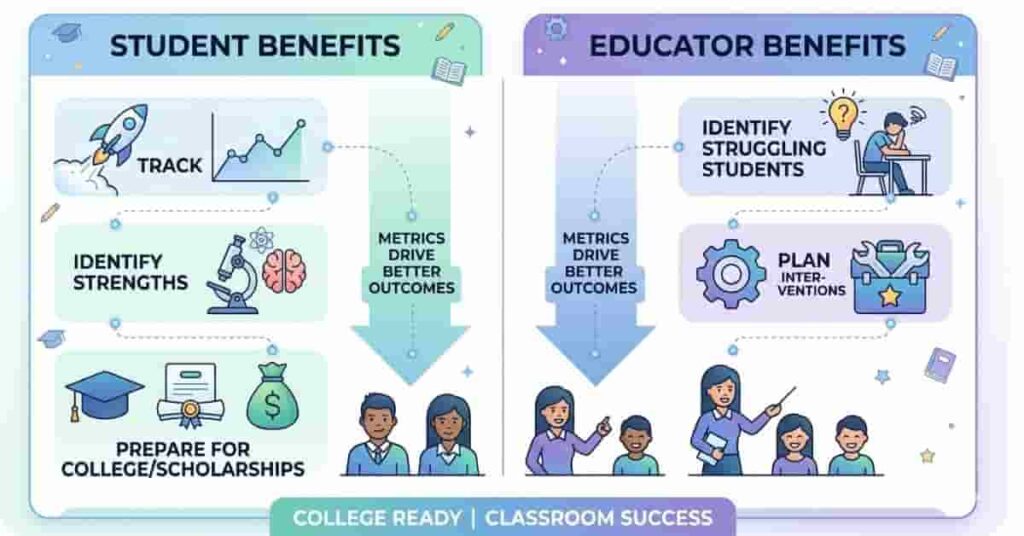
Benefits for Students
Academic performance helps students clearly track their learning progress. Grades, test scores, and feedback show what you understand well. They also reveal topics that need more practice.
When you review results regularly, you can:
- Spot strengths in certain subjects
- Identify weak skills early.
- Set realistic improvement goals.
Strong academic performance also prepares students for college admissions and scholarships. Many colleges review GPA, course rigor, and test results. Scholarship programs often require proof of consistent achievement. Students who understand the definition of academic performance can make smarter academic choices. They choose better study methods and manage time wisely.
Pro Tip: Review your grades monthly rather than wait for final report cards.
Benefits for Educators
Academic performance data helps teachers support students effectively. When teachers analyze scores and participation, they can identify struggling students early.
For example, low quiz scores may signal confusion about a key topic. Frequent absences may explain declining grades. Teachers can then adjust lessons or provide extra help.
Schools also use performance data to plan tutoring programs and academic interventions. Clear tracking allows educators to measure improvement over time. When students and teachers both understand what academic performance is, they work as a team. This shared understanding leads to better results and stronger learning outcomes.
Takeaways
- Academic performance helps students track growth and prepare for college.
- Teachers use performance data to guide support and interventions.
- Clear measurement leads to smarter decisions for everyone involved.
Common Misconceptions
Many students misunderstand the definition of academic performance. These myths can create stress and confusion. When you understand the true meaning of academic performance, you can focus on real growth rather than just numbers.
Let’s clear up two common misconceptions.
Academic Performance Is Only Grades
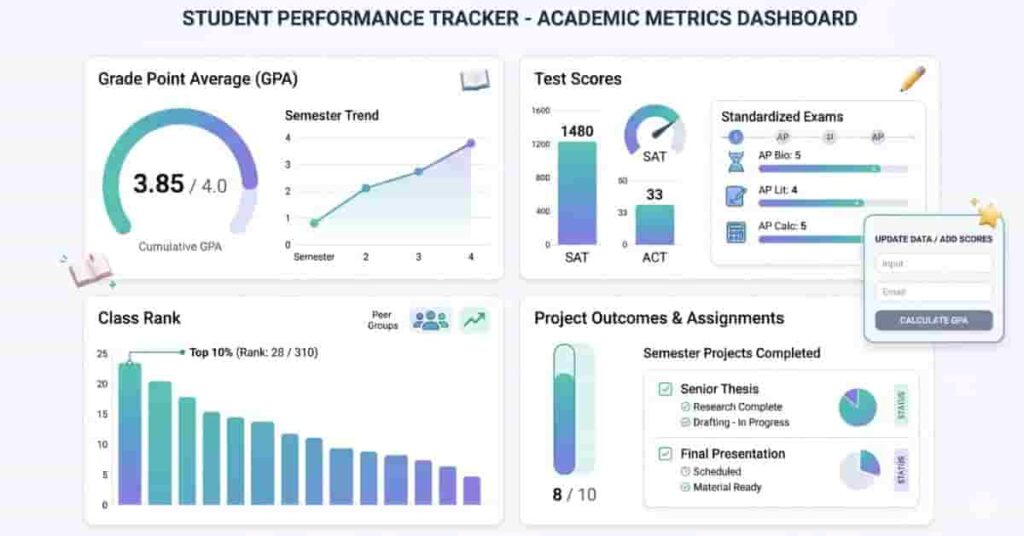
Many people think academic performance is defined simply as report card grades. That idea is too narrow. The definition of academic performance extends beyond letter grades and GPA.
Schools evaluate several factors, such as
- Class participation
- Homework completion
- Projects and presentations
- Attendance and effort
Grades reflect outcomes but do not capture the full learning process. A student may work hard, improve skills, and show strong effort even if grades are still rising. When educators explain what academic performance is, they include both results and behaviors. Consistency, engagement, and improvement all matter.
Pro Tip: Focus on skill growth and habits, not just final scores.
High Grades Mean High Learning
High grades feel great, but they do not always equal deep understanding. Some students memorize information for tests, then quickly forget it. That does not show lasting learning.
True academic performance meaning includes critical thinking, application, and problem-solving. Can the student explain ideas clearly? Can they apply knowledge in new situations? These questions matter. Participation also plays a role. Students who ask questions and join discussions often build a stronger understanding. Effort and curiosity support long-term success.
Strong learning combines:
- Knowledge mastery
- Critical thinking
- Active participation
- Consistent effort
Takeaways
- Academic performance includes behaviors and skills, not just grades.
- High grades alone do not guarantee deep understanding.
- Real success comes from learning, effort, and growth together.
Measuring Academic Performance
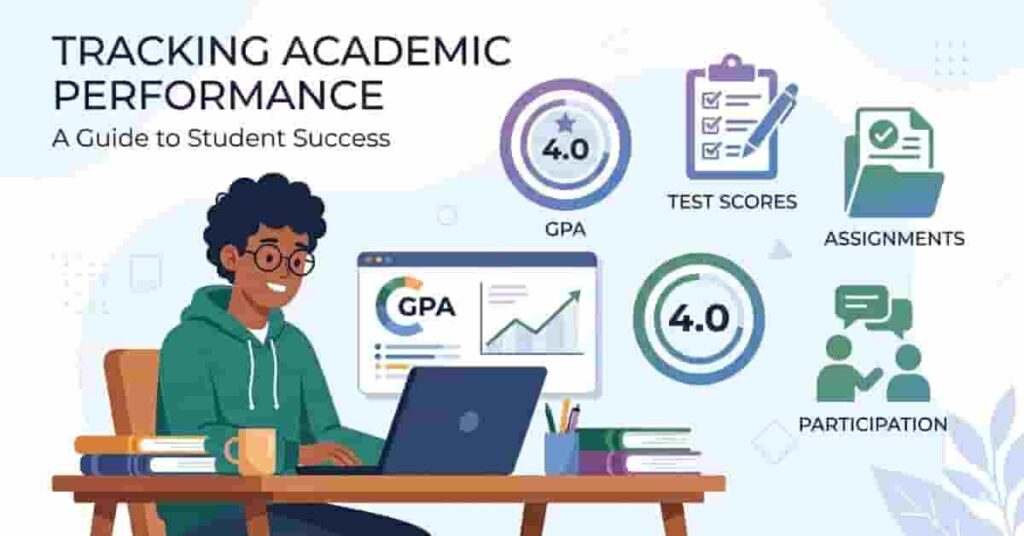
Schools use clear tools to measure student progress. When educators explain academic performance, they focus on measurable results. These results help students understand the meaning of their academic performance in a practical way.
Measurement allows fair comparison and goal setting. It also helps track improvement over time.
Here are the main ways schools measure academic performance:
- Scores: Quiz and test scores show understanding of specific topics.
- GPA (Grade Point Average): GPA summarizes overall performance across subjects.
- Class Rank: Rank compares a student’s GPA with classmates.
- Projects & Coursework: Essays, labs, and presentations measure applied skills.
Each method shows a different part of progress. Test scores reflect short-term understanding. GPA shows long-term consistency. Projects highlight creativity and critical thinking. Students should review all these measures together. Looking at only one number can be misleading.
If you want a clearer picture, you can use tools like our Academic Performance Indicator (API) Calculator. This tool combines grades, scores, and other factors into one performance view. It helps you track your strengths and identify areas for improvement.
Pro Tip: Check your GPA and major scores each grading period. Set one small improvement goal every month.
Takeaways
- Academic performance is measured through scores, GPA, rank, and projects.
- Multiple metrics provide a more accurate picture than a single grade alone.
- Smart tracking tools help students improve with clear data.
Conclusion
Understanding the definition of academic performance helps students see that success is more than just grades. This guide explained what academic performance means, its key concepts, measurement methods, and why it matters for growth and future opportunities. We also cleared common myths and highlighted how effort, participation, and skills play a big role.
Academic performance is multi-dimensional, combining knowledge, critical thinking, consistency, and measurable results. Tracking all these areas allows students to improve steadily and make informed choices about learning strategies.
Take control of your progress today. Check your performance with our Academic Performance Indicator (API) Calculator to identify strengths, pinpoint areas for improvement, and plan your path to success. Small steps now lead to bigger achievements later.

Team ClassRank builds smart, student-friendly calculators to make grade and rank tracking simple and accurate. For questions or feedback, contact us at classrankcalculator@gmail.com.