


Table of Contents
introduction
Ever wonder how colleges compare homeschool students when there’s no traditional classroom or class list?
For many homeschool families in the USA, class rank—a system ranking students by academic performance—can seem confusing or unnecessary. Public and private schools use set systems; homeschooling does not. This difference raises questions during college admissions and can confuse scholarship reviews and transcript evaluations. Beginners, especially, struggle to understand what class rank means outside traditional schools and may wonder whether it even applies to them.
This is where homeschool class rank becomes important—but only when used correctly. In some cases, class rank adds helpful academic context. In others, it is optional or better left out. Knowing the difference can save time, reduce stress, and prevent mistakes on homeschool transcripts.
In this guide, you’ll learn what class rank really means in a homeschool setting. You’ll find out why homeschool ranking works differently. You’ll also learn when colleges actually expect it. You’ll see how class rank fits alongside GPA, course rigor, and college admissions requirements for homeschoolers.
By the end, you’ll know whether class rank helps your situation and how to approach it with confidence and clarity.
Why Class Rank Matters for Homeschool Students
For homeschool students, class rank provides a vital academic benchmark that clarifies their achievements for college admissions.
Role of Class Rank in College Admissions
College admissions teams comb through thousands of applications, eager to spot signals that show how each student shines among their peers. While traditional schools offer this context with class rank, homeschool students usually don’t have that comparison built in.
A well-explained class rank:
- Helps admissions officers compare homeschoolers with public and private school students
- Shows academic strength beyond GPA alone
- Supports competitive applications at selective colleges
While some colleges do not require class rank from homeschoolers—which is typical—offering it when possible can make your application stand out, especially when paired with a thorough transcript and detailed school profile.
Impact on Merit-Based Scholarships and Competitive Programs
GPA and class rank often open doors to merit-based scholarships. Honors programs and automatic awards are likely to ask for your rank or percentile, so keep those numbers handy!
For homeschool students, class rank can:
- Support eligibility for merit aid
- Show academic standing for competitive scholarships.
- Help explain performance in advanced coursework.
If rank is not required, colleges may still use GPA percentiles or academic context in its place. A transparent rank calculation can prevent confusion and reduce follow-up questions.
How Class Rank Adds Context to Homeschool Transcripts
Homeschool transcripts vary widely. Class rank helps explain:
- How grades were evaluated
- How challenging the coursework was
- Where the student stands academically
When paired with:
- A grading scale
- Course descriptions
- GPA calculation method
Class rank transforms from a simple number into an engaging tool that reveals a richer, clearer academic story.
Takeaways
- Class rank is optional but useful for homeschool students.
- It helps colleges compare applicants fairly.
- It can support scholarships and honors programs.
Pro Tips
- Always explain how you calculated the class rank.
- Include a short school profile with grading details.
- Avoid inflating rank; accuracy builds trust.
Understanding your percentile is key to interpreting your homeschool class rank. Check out our guide on the class rank percentile calculator for more details. Using a percentile calculator can help put your GPA into perspective and clarify your ranking among peers.
Challenges of Calculating Class Rank in Homeschooling
Calculating class rank in homeschooling can be challenging. Unlike traditional schools, homeschool programs use various systems, making ranking difficult and sometimes confusing for families and colleges.
Recognizing these obstacles is essential. It prepares parents to address specific differences as they build academic records and move into new areas of the class rank process.
No Standardized Peer Group
Traditional schools rank students against a clear class. Homeschool students rarely have that option. Many learn alone or in small groups.
Common peer group issues include:
- Only one student in a grade level
- Small homeschool co-ops with mixed abilities
- Changing peer groups from year to year
Without a defined group, class rank can feel artificial. In these cases, families may use percentiles, co-op groups, or umbrella schools to create context. When no peers exist, reporting “rank not applicable” is often more honest.
Differences in Grading Scales and Curricula
Homeschool grading systems vary widely. One family may use a strict 4.0 scale. Another may use mastery-based grading.
Curriculum differences add more complexity:
- Self-paced learning
- Online or dual-enrollment courses
- Honors and AP-level content without formal labels
These differences make it harder to fairly compare students. Colleges look for clear grading explanations, not perfect alignment with public schools.
Limited Comparability With Traditional School Rankings
Public schools usually rank many students using the same rules. Homeschool ranks involve very small groups.
This creates challenges such as
- Inflated rankings due to small sample size
- Lack of statewide or national comparison
- Misunderstanding of what the rank represents
As a result, colleges often give more weight to GPA, course rigor, and test scores than to homeschool class rank alone.
How Colleges Interpret Self-Reported Homeschool Ranks
Admissions officers know homeschool ranks are self-reported and review them carefully.
Colleges typically:
- Check if the ranking method is explained.
- Look for consistency across transcripts.
- Use rank as context, not as a deciding factor.
A well-documented rank builds credibility. A vague or inflated one can raise questions. Transparency always works in the student’s favor.
Takeaways
- Homeschool class rank lacks standardization.
- Small peer groups limit comparability.
- Clear explanations matter more than the rank itself.
Pro Tips
- Include a school profile explaining grading and ranking.
- Avoid ranking when no fair peer group exists.
- Use GPA percentiles as an alternative when needed.
Step-by-Step Guide to Calculating Homeschool Class Rank
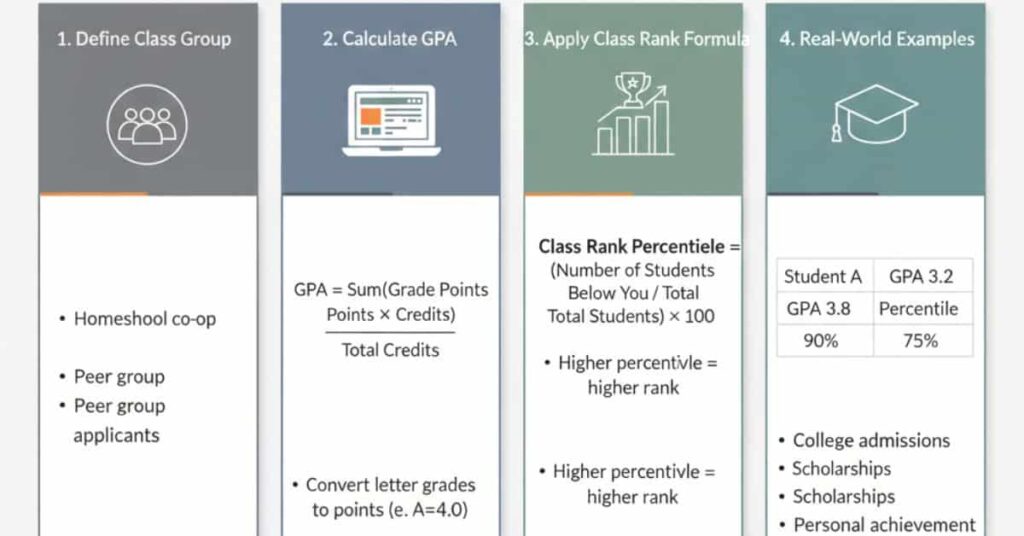
Calculating homeschool class rank is most effective when supported by a clear, documented process. Colleges care more about your method than the number. These steps make ranking fair and easy to understand.
Step 1 – Define the Class Group
First, decide who the student is compared to. There is no default class in homeschooling, so define it clearly.
Common options include:
- Siblings in the same grade level, if more than one child studies together
- Homeschool co-ops or learning groups, where students take similar courses
- Umbrella or accredited homeschool programs that issue transcripts
- GPA percentile benchmarks when no direct peers exist
If the student studies alone, peer-based rank may not apply. Colleges prefer honesty over forced ranking. Clearly define the class group or explain why rank isn’t used.
Step 2 – Calculate GPA Accurately
After defining the class group, use a consistent 4.0 grading scale, as most colleges expect.
Key GPA methods include:
- Unweighted GPA using standard letter grades
- Weighted GPA for Honors, AP, or Dual Enrollment courses
- Consistent grading across all semesters and subjects
Don’t change grading rules midway. Consistency builds trust. If you use weighted grades, explain them clearly in your transcript or school profile.
Step 3 – Apply the Class Rank Formula
After the GPA calculation, rank the students from highest to lowest GPA. Assign each student a numerical rank.
Use this standard formula:
| Metric | Formula |
|---|---|
| Class Rank Percentile | (Rank ÷ Total Students) × 100 |
Percentile ranking works well for homeschool settings because it:
- Provides context without overstating precision
- Works with small class sizes
- Aligns with how many colleges. Always explain what your percentile compares to—the co-op, program, or benchmark group.
Step 4 – Real-World Examples
Example 1: Homeschool Co-op (5 Students) If a student ranks 2nd out of 5:
- Rank: 2
- Total students: 5
- Percentile: 40%
This means the student performs above the 60% mark in the group.
Example 2: Single Homeschool Student When no peers exist, ranking is optional. Many families report:
- “Class rank: Not applicable.”
- GPA with a detailed grading explanation
This approach is widely accepted and often preferred by colleges.
Takeaways
- Define the class group before ranking.
- Use a clear, consistent GPA system.
- Percentiles work best for homeschool rankings.
Pro Tips
- Document every step of the ranking process
- Include explanations in a school profile
- Avoid forced rankings when there are no peers.
GPA and Course Weighting in Homeschool Ranking
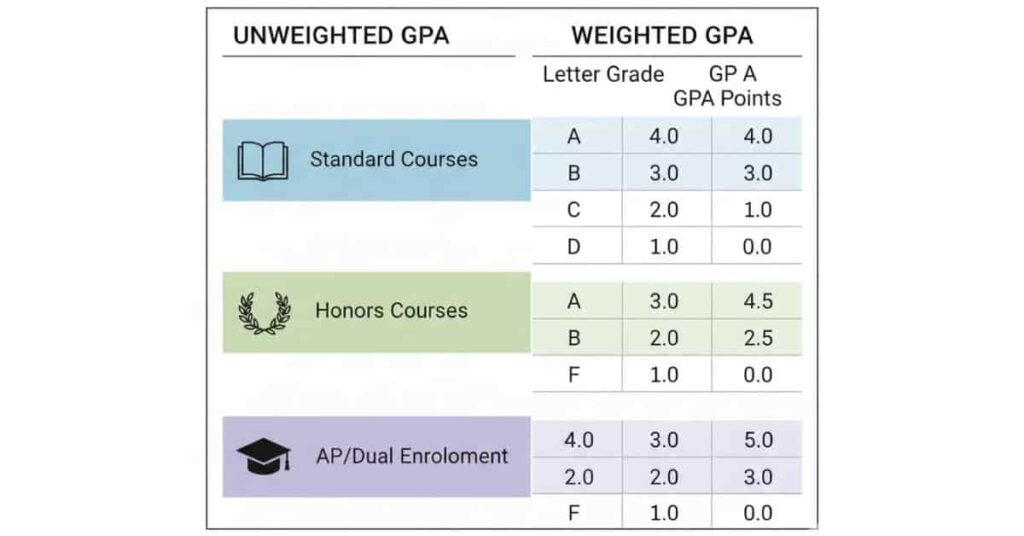
A clear, well-explained GPA weighting system on homeschool transcripts demonstrates academic rigor. Using weighted GPAs makes course difficulty clear and helps admissions officers evaluate homeschool applicants.
Why Weighted GPA Improves Transcript Credibility
Colleges expect advanced courses to carry more weight, and homeschool students can use a similar point system as public schools for honors, AP, and dual enrollment classes.
A weighted GPA helps by:
- Showing course difficulty, not just final grades
- Preventing unfair comparison with standard-level courses
- Aligning homeschool transcripts with traditional school formats
When colleges see a familiar, clearly explained GPA structure, they can review applications with more confidence.
Assigning Weights to Advanced Courses
Course weights should be simple and consistent. Explain them clearly. Do not use complex systems that could confuse reviewers.
Common homeschool weighting methods:
- Standard courses: 4.0 scale
- Honors courses: +0.5 weight
- AP or Dual Enrollment: +1.0 weight
Only give extra weight to courses that meet advanced standards. Explain your course descriptions and the materials you used to support the weighting.
Avoiding GPA Inflation
GPA inflation is a common concern with homeschool transcripts. High GPAs that do not match course rigor stand out during admissions review.
To avoid this:
- Apply weights consistently across all semesters.
- Do not over-label courses as Honors or AP.
- Keep grading standards realistic and documented.
Be honest when reporting GPAs. This builds trust and lowers the risk of application delays or extra questions.
Sample Homeschool GPA Weighting Structure
A simple structure works best:
- A = 4.0 (Standard), 4.5 (Honors), 5.0 (AP/Dual Enrollment)
- B = 3.0, 3.5, 4.0
- C = 2.0, 2.5, 3.0
Including this structure in your school profile or transcript notes helps make things clearer for everyone.
Tools and Methods for Homeschool Class Rank Calculation
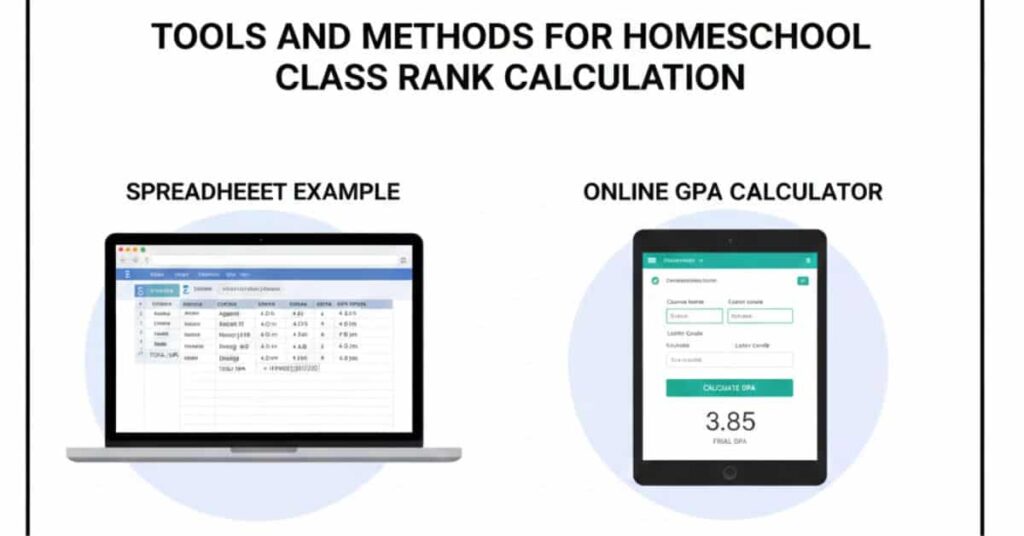
Homeschool families can calculate class rank using simple tools or online systems. Depending on class size, grading style, and reporting needs, different methods work best. Colleges do not expect complex software; instead, they value clarity, consistency, and good documentation.
Manual GPA and Class Rank Tracking Methods
Many families choose to start with manual tracking, especially in small groups, because it gives them full control over grading rules.
Common manual tools include:
- Spreadsheets for GPA and course tracking
- Written grade logs by semester
- Ranking lists sorted by GPA
Manual tracking lets parents clearly explain every step. This openness builds trust with admissions officers. By keeping records up to date each term, you’ll make things easier for yourself down the road and help avoid surprises.
Printable Homeschool Transcript Templates
Offering a clean, professional format, printable transcript templates also help standardize information year to year.
Good templates usually include:
- Course titles and credit hours
- Final grades and GPA
- Grading scale and weighting notes
- Optional class rank or percentile
Using the same template each year not only improves readability but also helps you and others easily track progress over time. It’s a small step that can make a big difference for the organization and peace of mind.
Online GPA and Class Rank Calculators for Homeschoolers
By saving time and reducing math errors, online calculators offer an efficient solution. Many support flexible grading systems tailored to non-traditional students.
Helpful features to look for:
- Support for weighted and unweighted GPA
- Custom grading scales
- Small class sizes or percentile-based ranking
These tools are most effective when families also provide clear documentation of grading rules.
Custom Grading Scales Homeschool programs often call for a flexible approach. Thankfully, some calculators and templates allow you to customize things like letter-grade ranges, credit systems, and even account for just one student, making the process truly fit your situation. me calculators and templates allow:
- Custom letter-grade ranges
- Non-standard credit systems
- Adjustable class sizes, including single-student cases
Because flexible settings prevent forcing traditional models on unique situations, families can report accurate results.
When calculating your homeschool GPA, it’s important to know the difference between weighted and unweighted class rank. Learn how weighting affects your overall rank and college applications in our detailed guide on weighted class rank vs unweighted.
How Colleges Evaluate Homeschool Class Rank
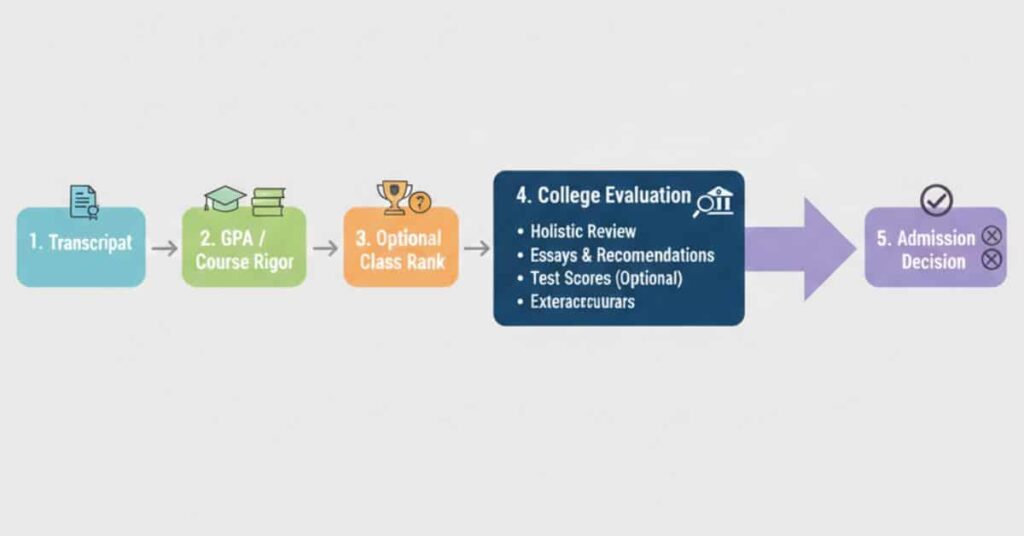
Colleges recognize homeschooling’s differences and review applications with flexible standards. Class rank is rarely required.
Why Many Colleges Do Not Require Class Rank
Most colleges do not expect homeschool students to submit a class rank. Many homeschoolers lack a defined peer group, making ranking impractical.
Colleges avoid requiring rank because homeschool classes are usually small.
- Ranking systems vary widely.
- GPA and coursework provide clearer insight
Instead, admissions teams focus on academic quality, not position in a class.
Alternative Evaluation Methods for Homeschool Applicants
When class rank is missing, colleges use other tools to gauge readiness.
Common alternatives include:
- Cumulative GPA and course rigor
- Standardized test scores, when submitted
- Detailed course descriptions
- Academic portfolios or work samples
- Recommendation letters from instructors or mentors
These materials often carry more weight than class rank alone.
How Admissions Officers Review Homeschool Transcripts
Admissions examines homeschool transcripts for clarity, structure, and consistency.
They typically check:
- Grading scale and GPA calculation method
- Course difficulty and progression
- Documentation through a school profile
A clear transcript provides a full academic picture, even without class rank.
When Submitting Class Rank Strengthens an Application
Class rank helps in certain cases.
It may strengthen an application when:
- The student is part of a co-op or umbrella school.
- Rank is considered for eligibility for scholarships or honors programs.
- The ranking method is clearly explained.
Used thoughtfully, class rank offers valuable context that clarifies rather than confuses.
Common Mistakes Homeschool Families Should Avoid
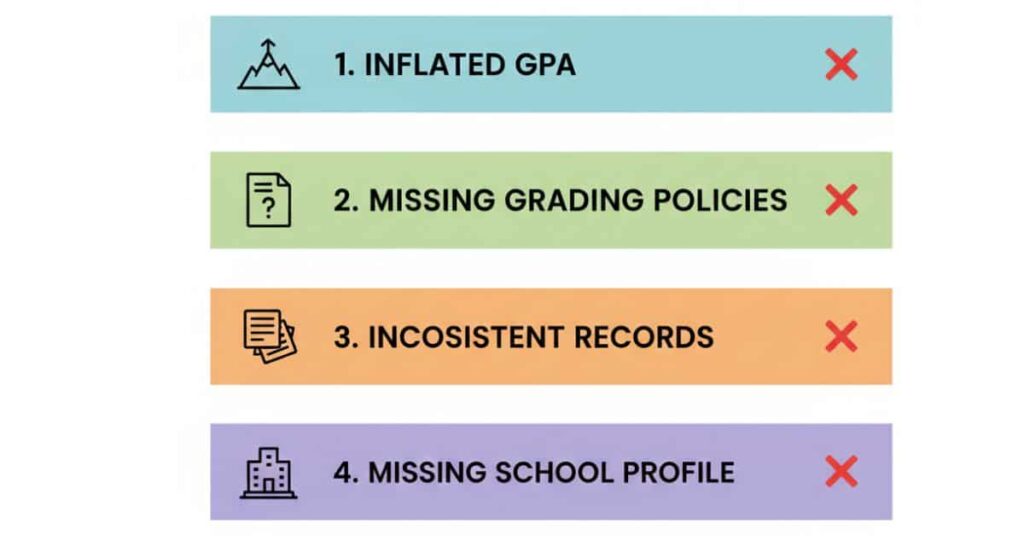
Homeschool transcripts are closely reviewed by college admissions officers. Small errors can delay applications or raise doubts. Avoiding these mistakes ensures clear and credible records.
Inflating GPA or Rank Unrealistically
Inflated GPAs or ranks damage credibility. Admissions officers review many transcripts and spot unrealistic numbers.
Common inflation issues include:
- Labeling most courses as Honors or AP
- Applying excessive grade weights
- Ranking a student highly without a clear peer group
Honest reporting is best. A realistic GPA with rigorous courses matters more than perfect numbers.
Failing to Document Grading Policies
Colleges must understand how grades are earned. Without documentation, even accurate GPAs lose value.
Always document:
- Grading scale and letter-grade ranges
- GPA calculation method
- Course weighting rules
Include this information in a homeschool profile or transcript notes.
Inconsistent Record Keeping
Inconsistent records cause confusion. Year-to-year changes in rules or formats make transcripts harder to review.
Problems often appear when:
- GPA scales change mid-program
- Course titles vary without explanation.
- Credits are assigned unevenly.
Consistent formatting and grading build trust and speed up reviews.
Omitting a Homeschool School Profile
A school profile explains the homeschool in one place. Without it, admissions lack context.
A strong school profile includes:
- Educational philosophy and structure
- Curriculum sources
- Grading and ranking methods
This document helps colleges correctly interpret transcripts.
Conclusion
In this guide, we explained how homeschool class rank works, why it differs from traditional schools, and when it truly matters. We also covered GPA weighting, tools, college evaluation, and common mistakes to avoid.
The key takeaway is simple. Class rank is a supportive tool, not a requirement, for most homeschool students. When used, it should be clear, honest, and well-documented. Colleges value transparency more than perfect numbers. A strong GPA, rigorous coursework, and a clear school profile often matter more than rank alone.
If you choose to include homeschool class rank, make sure it adds real academic context. If not, focus on building a complete and accurate homeschool transcript that tells your student’s story.
Ready for the next step? Take action today!
Visit our homeschool GPA and class rank resources now to calculate your results accurately and confidently.
If you found this guide helpful, share it with other homeschool families, or post your questions and experiences in the comments below to help our community grow.

Team ClassRank builds smart, student-friendly calculators to make grade and rank tracking simple and accurate. For questions or feedback, contact us at classrankcalculator@gmail.com.