


Introduction
Have you ever wondered why your class rank feels confusing? Many students in the USA struggle to understand how rankings really work. Schools use class rank to compare students, but the process isn’t always straightforward. Some ranks are weighted, others are unweighted, and each affects your GPA differently.
In this guide, you’ll learn how to calculate weighted class rank (vs unweighted) and see how grades translate into rank. We’ll break down the difference between weighted and unweighted systems, explain how GPA contributes, and show step-by-step methods for how to calculate class ranking from grades.
By the end, you’ll know exactly how your courses and grades impact your class position. You’ll also see why taking advanced classes can boost your weighted GPA. Whether you’re aiming for college admissions or just curious about your academic standing, this guide makes it simple to understand and apply.
Unweighted Class Rank Explained
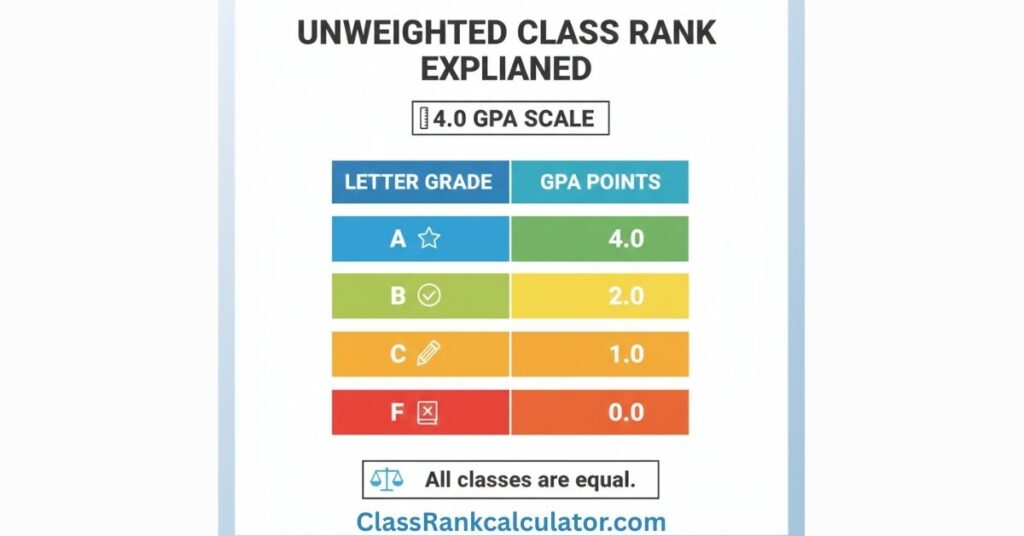
To understand how to calculate weighted class rank (vs. unweighted), you must first know how unweighted class rank works. Schools often use unweighted rank as a simple, fair way to compare students. It treats every class the same, no matter how challenging the course is. This method helps explain the core difference before learning how to calculate weighted class rank. Here’s how to apply this effectively:
GPA on a Standard 4.0 Scale
Unweighted class rank uses a 4.0 GPA scale. Each letter grade converts into fixed points. Course difficulty does not matter.
Common grade values include:
- A = 4.0
- B = 3.0
- C = 2.0
- D = 1.0
- F = 0.0
Schools average these points across all classes. The result is your unweighted GPA. Students then rank from highest to lowest GPA. This method makes calculating class ranking from grades easy and transparent. However, it ignores whether a class was basic or advanced.
Example: All Classes Carry Equal Weight
In an unweighted ranking, every class counts the same. A regular math class equals an honors or AP class.
Example:
- Student A earns an A in AP Biology
- Student B earns an A in regular biology.
Both students received 4.0 points. Their GPAs stayed equal, even though one class was more challenging. This approach helps explain why many schools later move to how to calculate weighted class rank for fairness.
Knowing your class rank percentile helps you interpret weighted and unweighted GPA differences in a clear, comparable way. Using a class rank percentile calculator can show exactly how advanced courses affect your standing.
Pros & Cons of Unweighted Ranking
Pros
- Easy to understand and calculate
- Fair for schools without advanced courses
- Clear comparison across students
Cons
- Ignores course difficulty
- Can discourage taking more challenging classes
- May not reflect academic rigour
Unweighted rank works best for simplicity, but it has limits. That’s why weighted systems exist.
Weighted Class Rank Explained
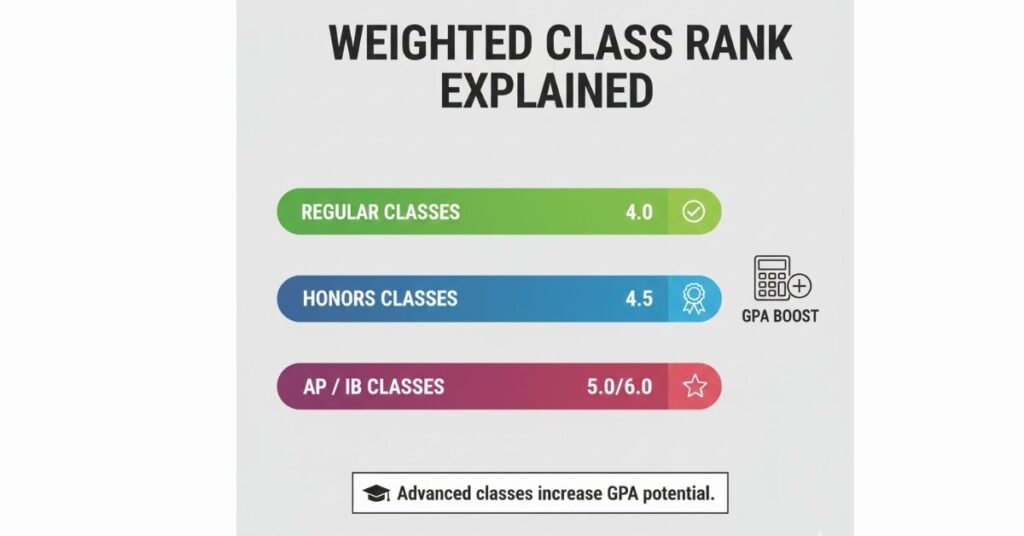
To calculate weighted class rank (vs. unweighted), schools adjust GPA to reward more challenging courses. A weighted system adds bonus points for advanced classes. These usually include honors, AP, and IB courses. This approach gives credit for academic rigor, not just high grades. It also explains why weighted rankings often differ from unweighted ones. Here’s how this system works in practice:
GPA on a 5.0 or 6.0 Scale with Bonus Points
Weighted class rank uses a GPA scale larger than 4.0. Many schools use 5.0 or 6.0 scales.
Typical structure:
- Regular class A = 4.0
- Honors class A = 4.5
- AP or IB class A = 5.0 or higher
Schools apply these values when they calculate class ranking from grades. The added points help students who take more challenging courses rank higher. Exact scales vary by school, so policies matter.
Why Schools Prefer Weighted GPA for Course Difficulty
Weighted GPA reflects how challenging a student’s schedule is. Schools know not all A’s require equal effort.
Key reasons schools use weighted ranking:
- Rewards students who choose rigorous courses
- Encourages academic challenge over easy grades
- Creates fairer comparisons among top students
This system better supports how to calculate weighted class rank in competitive environments. Many colleges also review weighted GPAs, even if they later recalculate them.
Example of a Weighted Scale
Here’s a simple example that shows the difference clearly.
- A in AP Chemistry = 5.0
- A in regular Chemistry = 4.0
Two students earn the same letter grade. The student in the AP class ranks higher due to added weight. This example shows why weighted class rank often reshapes class standings.
Formula: How to Calculate Weighted Class Rank
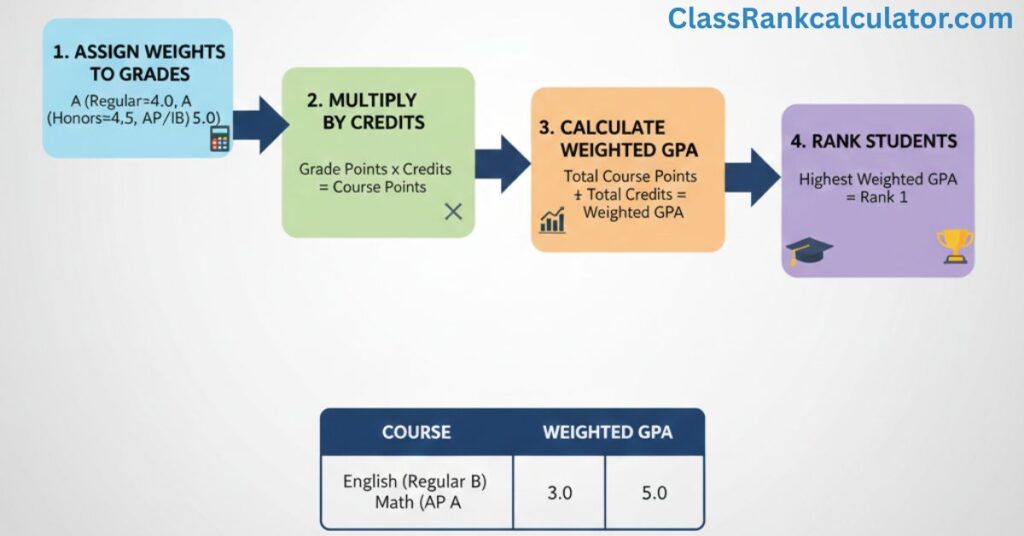
To calculate weighted class rank (vs. unweighted), schools follow a clear, step-by-step formula. This method turns grades into a weighted GPA, then uses that GPA to rank students. While exact policies vary, the core process stays the same. Understanding these steps also makes calculating class ranking from grades much easier. Here’s how to apply this effectively:
Step 1: Assign Weights to Each Grade
Start by converting letter grades into GPA points. Then add extra weight for advanced courses.
Typical example:
- Regular class A = 4.0
- Honors class A = 4.5
- AP or IB class A = 5.0
Schools define these values in their grading policy. Always check your school’s scale before calculating.
Step 2: Multiply by Credit Hours (If Applicable)
Some schools use credit hours. In that case, multiply each course’s GPA value by its credits.
Example:
- AP Math (5.0 GPA × 1 credit) = 5.0 points
- Regular English (4.0 GPA × 1 credit) = 4.0 points
If all classes have equal credits, you can skip this step.
Step 3: Calculate Weighted GPA
Add all weighted grade points together. Then divide by total credits or total classes.
Formula: Weighted GPA = Total weighted points ÷ Total credits
This number may exceed 4.0. That’s normal in weighted systems.
Step 4: Rank Students Based on Weighted GPA
Schools sort students from highest to lowest weighted GPA. The highest GPA earns Rank #1. This final list becomes the weighted class rank.
Table: Weighted vs Unweighted GPA Example
Course TypeGradeUnweighted GPAWeighted GPAAP BiologyA4.05.0Regular MathA4.04.0Average GPA—4.04.5
Table: Weighted vs Unweighted GPA Example
| Course Type | Grade | Unweighted GPA | Weighted GPA |
|---|---|---|---|
| AP Biology | A | 4.0 | 5.0 |
| Regular Math | A | 4.0 | 4.0 |
| Average GPA | — | 4.0 | 4.5 |
This table shows why weighted systems change rankings. Advanced courses raise GPA and improve rank.
How to Calculate Class Ranking from Grades
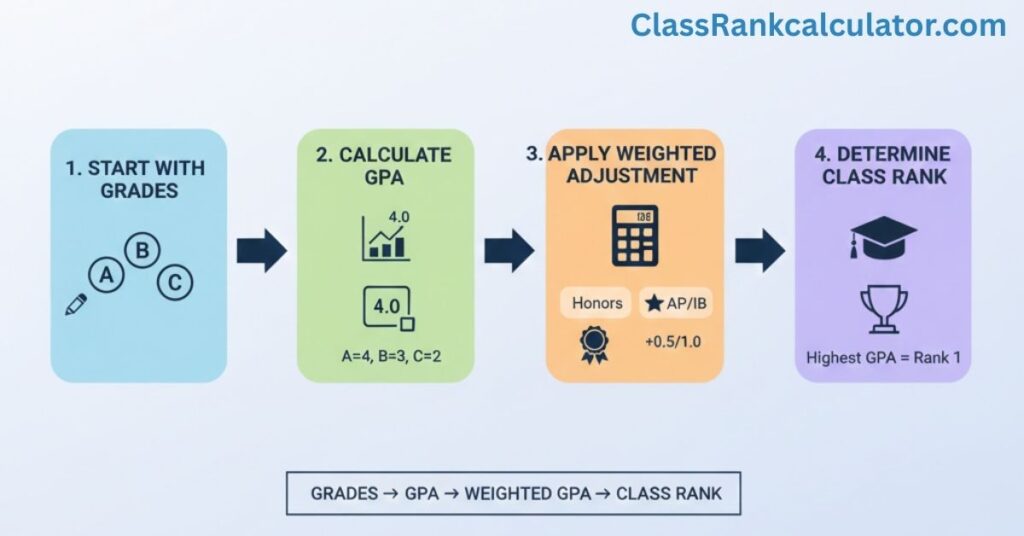
Understanding how to calculate class ranking from grades helps you see where you stand in your class. Schools follow a straightforward process. They first convert grades into GPA points. Then they apply course weights if the system allows it. This method also supports how to calculate weighted class rank when advanced classes are involved. Here’s how to use this step-by-step:
Converting Letter Grades into GPA Points
Start by turning each letter grade into GPA points. Most schools use a standard scale.
Common values include:
- A = 4.0
- B = 3.0
- C = 2.0
- D = 1.0
- F = 0.0
List all your classes and write the GPA value next to each grade. This step creates the base for both weighted and unweighted calculations.
Assigning Weights for Advanced Courses
If your school uses weighted ranking, add bonus points for more challenging classes.
Typical weights:
- Regular classes: no bonus
- Honours classes: +0.5 points
- AP or IB classes: +1.0 point
For example, a B in an AP class becomes 4.0 instead of 3.0. Always follow your school’s official policy.
Example: Step-by-Step Grade-to-Rank Conversion
- Convert grades into GPA points
- Add weights for advanced courses
- Calculate the average GPA
- Compare your GPA with classmates
Example:
- Student GPA: 4.3
- Class GPAs range from 3.2 to 4.6.
After sorting GPAs, the student’s position determines class rank. This final step turns grades into rank.
Weighted vs. Unweighted Class Rank: Which Is Better?
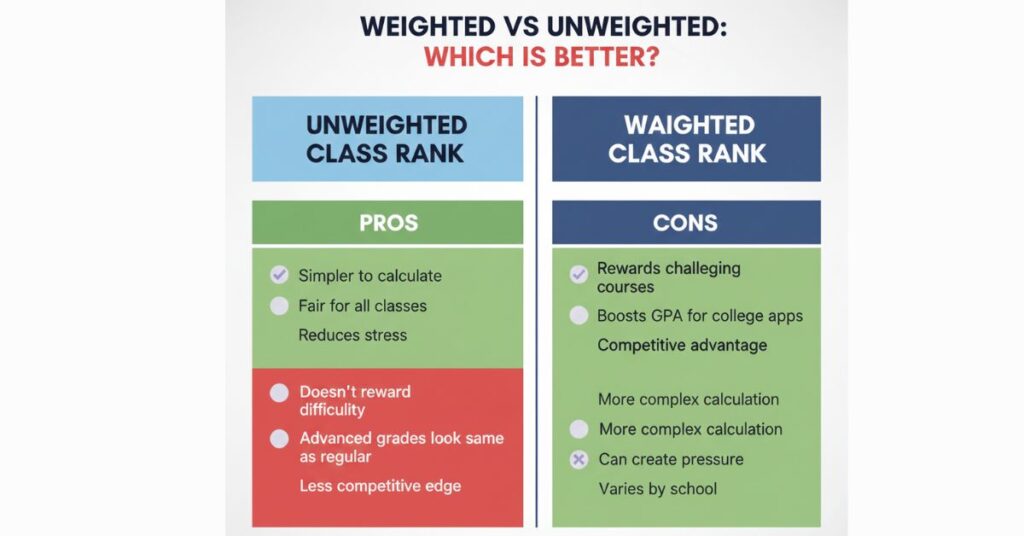
When students calculate weighted class rank (vs. unweighted), they often ask which system matters more. The answer depends on goals, school policy, and college plans. Both rankings serve a purpose. Understanding the difference also helps clarify how to calculate class ranking from grades in real situations. Here’s how to compare them clearly:
Advantages of Weighted Class Rank
Weighted class rank rewards students for taking more challenging courses. It does more than count grades.
Key benefits include:
- Gives credit for Honours, AP, and IB classes
- Encourages academic challenge over easy A’s
- Creates fairer rankings among top students
This system better reflects effort and course rigor. That’s why many high schools rely on weighted ranking to separate strong students.
When Unweighted Class Rank Still Matters
Unweighted rank remains essential in some cases. It offers a clean, simple comparison.
Schools may use unweighted rank when:
- Advanced courses are not widely available
- They want equal treatment for all classes
- Reporting basic academic performance
Some colleges also ask for an unweighted GPA to compare students across different schools. It shows performance without course difficulty.
Universities’ Preferences
Colleges review both weighted and unweighted GPAs. Many also recalculate GPA using their own rules.
Common practices include:
- Removing course weights
- Focusing on core academic classes
- Using internal evaluation systems
This approach helps colleges stay fair across schools. That’s why understanding both rankings is useful.
After understanding weighted vs unweighted class rank, a quartile, decile & tenth class rank calculator can help place your GPA in a broader academic context. Using a quartile, decile & tenth class rank calculator alongside your GPA ensures you see the full picture of your class performance.
Common Issues with Weighted Ranking
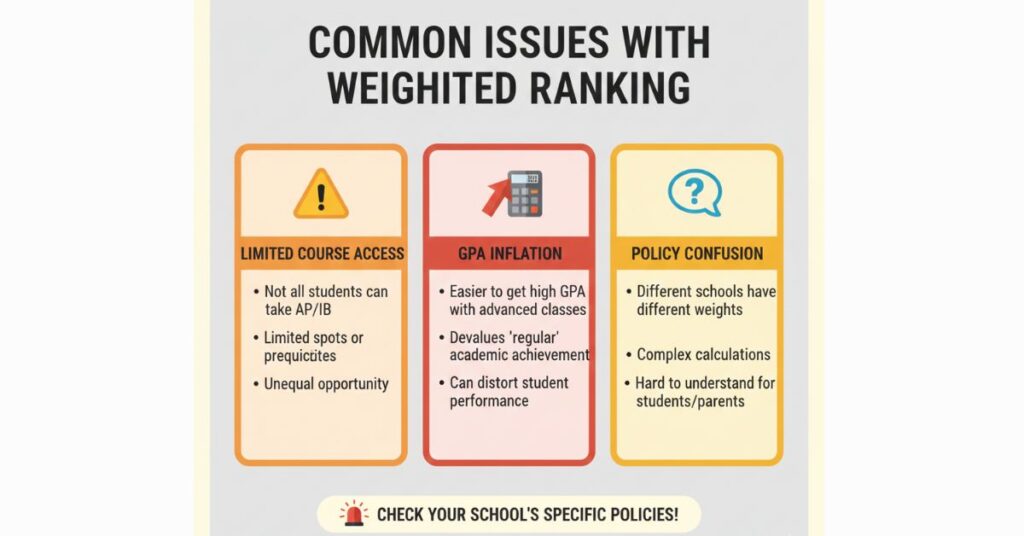
When students calculate weighted class rank, the system may seem fair at first. However, weighted ranking can create problems if schools apply it poorly. These issues affect how schools calculate weighted class rank (vs unweighted) and how colleges interpret results. Understanding these limits helps students avoid confusion and plan smarter.
Limited Access to AP, IB, or Honours Courses
Not all students have equal access to advanced classes. Some schools offer few or no AP or IB options.
This creates problems because:
- Students cannot earn bonus GPA points
- Class rank may favour students with more course access
- Rankings may reflect opportunity, not ability
Colleges often review school profiles to understand these limits, but class rank alone may not show the whole picture.
GPA Inflation Concerns
Weighted systems can push GPAs very high. Some students graduate with GPAs well above 4.0.
This can:
- Reduce meaningful differences between top students
- Make the rank less accurate
- Create confusion when comparing schools
That’s why some colleges recalculate GPA using a standard scale.
Misunderstanding School-Specific Policies
Each school sets its own weighting rules. Many students assume all systems work the same.
Common misunderstandings include:
- Assuming every AP class adds the same weight
- Ignoring credit hours or capped GPAs
- Using online tools without matching school rules
Always follow your school’s official grading policy.
Conclusion
In this guide, we explored how to calculate weighted class rank (vs unweighted) and break down grades into meaningful class standings. You learned the difference between unweighted and weighted GPAs, how to assign weights for advanced courses, and step-by-step methods for how to calculate class ranking from grades.
Understanding your school’s grading policy is essential for accurate calculations. Weighted rank rewards challenging courses, while unweighted rank provides a clear, simple comparison. Calculating both versions gives you a complete picture of your academic performance.
Now it’s your turn: try calculating your own class rank and see how your grades stack up. Please share your experience in the comments or explore our other resources to master GPA and ranking strategies.
“Ready to see where you stand? Try calculating your own class rank today using our free GPA calculator. Share your results or questions in the comments below, and explore more resources to boost your academic performance!”

Team ClassRank builds smart, student-friendly calculators to make grade and rank tracking simple and accurate. For questions or feedback, contact us at classrankcalculator@gmail.com.