

Introduction
Many students in the United States struggle with balancing school demands, motivation, and time management. Academic performance impacts confidence and future success, making it crucial for high school and college students to improve their results.
Academic success relies on more than intelligence. Small changes in study habits, organization, and routines can transform outcomes. The right strategies help students focus, raise test scores, and build strong learning habits.
This guide gives you practical tips and strategies to improve academic performance, track progress, and identify growth areas. By the end, you’ll have clear steps to boost results and grow your academic confidence.
To improve results effectively, students should first understand how academic performance is evaluated.
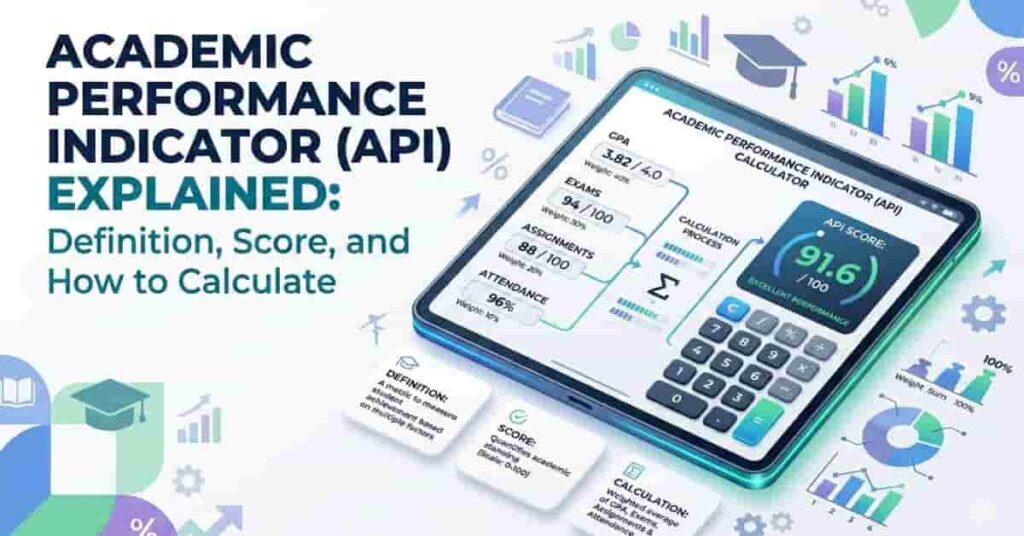
Want to know where you currently stand? Use our Academic Performance Calculator to instantly measure your GPA, exams, assignments, and attendance score.
Understanding Your Current Academic Performance
Before you can boost your grades, you must assess your current standing. Many students adopt new study techniques without evaluating existing results, often causing confusion and delaying improvement.
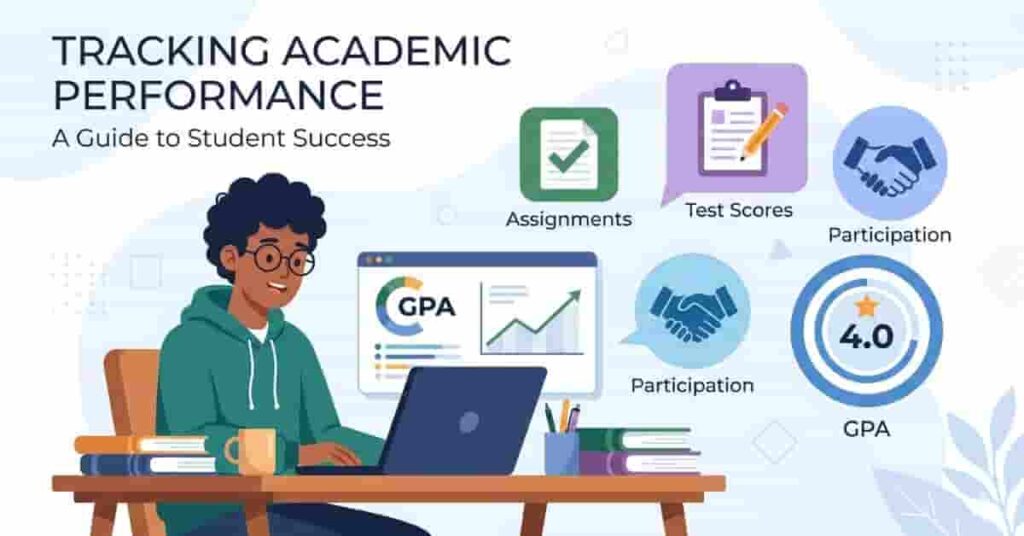
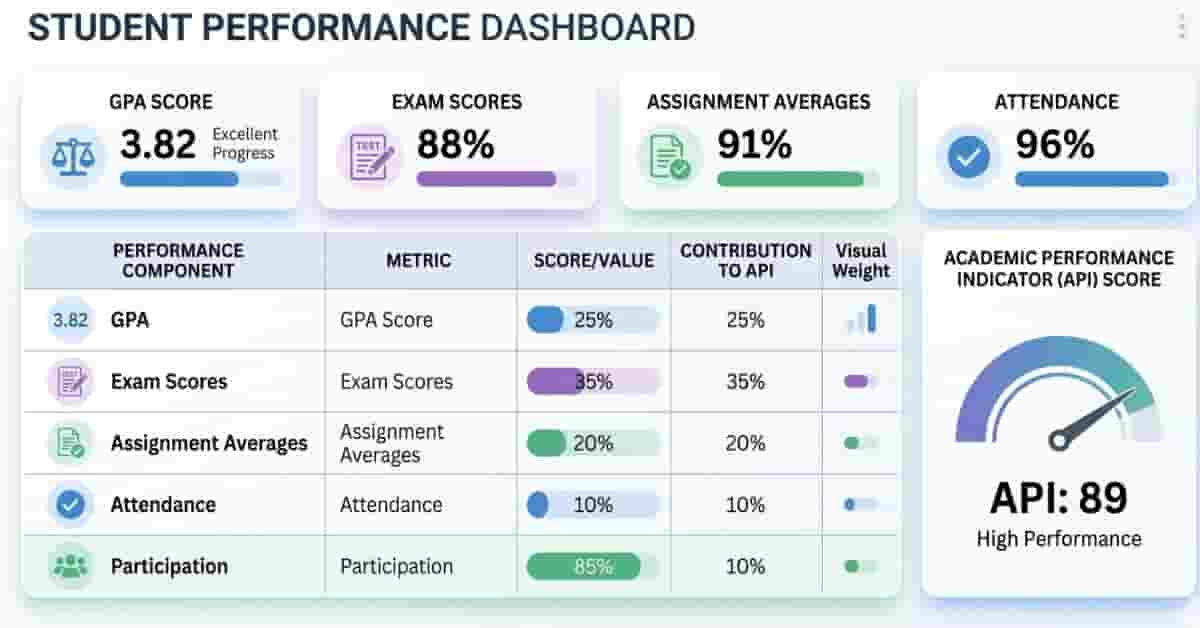
Identifying your starting point reveals weak areas and tracks growth. Your GPA, exam scores, assignments, and attendance indicate academic progress. Understanding these numbers helps you set practical goals for improvement.
An Academic Performance Indicator (API) Calculator simply assesses progress. It combines GPA, exam results, assignments, and attendance into a single metric, giving you a clear picture of your current standing rather than guesswork.
For example, a student may excel in assignments but lag in exams. The calculator quickly exposes this gap. Once you know your position, you can target strategies to elevate academic performance.
Tracking performance builds motivation. Small gains in test scores or attendance gradually raise your overall score. Over time, these improvements lead to stronger results and greater confidence.
Example of a Simple Academic Performance Breakdown
| Component | Weight | Score | Contribution |
|---|---|---|---|
| GPA | 40% | 3.5 | 35 / 40 |
| Exams | 30% | 85% | 25.5 / 30 |
| Assignments | 20% | 90% | 18 / 20 |
| Attendance | 10% | 95% | 9.5 / 10 |
| Total API Score | 100% | – | 88 / 100 |
This type of breakdown makes it easier to see which areas need attention.
Key Takeaways
- Measuring your current performance is the first step toward improvement.
- Tools like an API calculator provide a clear performance snapshot.
- Identifying weak areas helps you focus on the right study strategies.
- Start tracking your performance today and watch as small gains add up to significant academic success.
Key Strategies to Improve Academic Performance
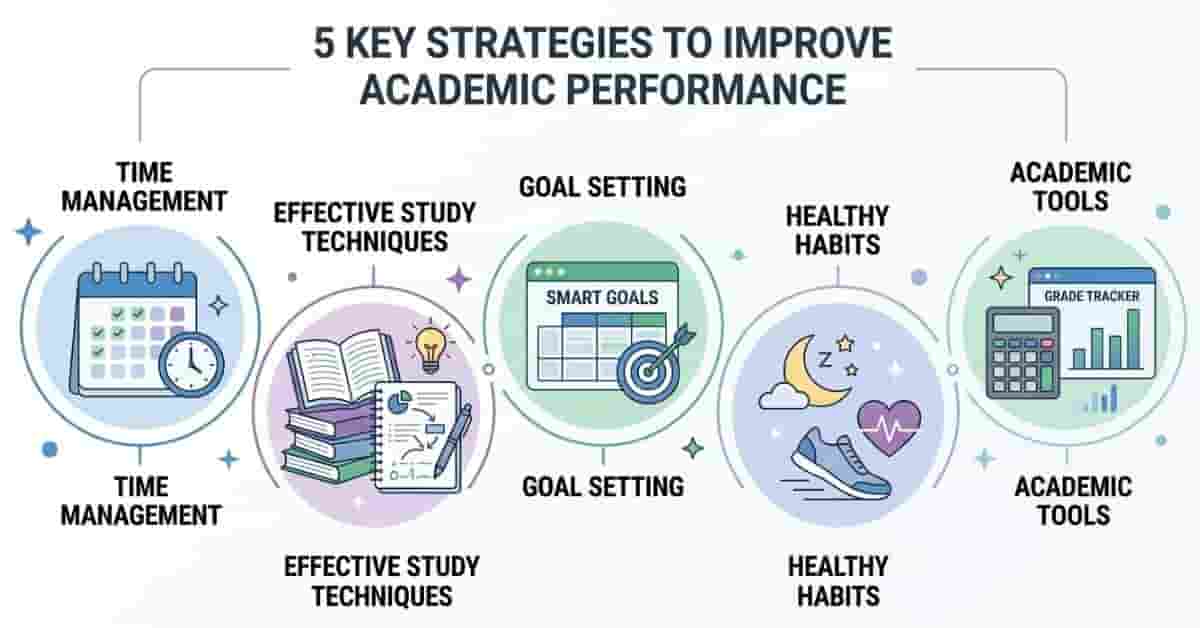
Improving grades rarely occurs instantly. Progress results from consistent, intentional changes in everyday habits. Many high-achieving students follow straightforward systems to stay organized, focused, and motivated.
The good news is that anyone can use these strategies. You do not need rare talent or costly resources. By developing disciplined habits, students steadily progress and achieve tangible academic gains. Below are proven strategies that will empower you to excel academically in high school and college.
Time Management & Organization
Effective time management enables students to stay ahead on assignments and avoid last-minute anxiety. When tasks accumulate, maintaining concentration and performance becomes challenging.
Start by creating a weekly study schedule. Divide study time into shorter sessions rather than long, exhausting blocks. Short sessions improve focus and help information stay in memory longer.
Simple organizational habits also make a big difference:
- Use a planner or digital calendar to track deadlines.
- Break large assignments into smaller tasks.
- Set fixed study times each day.
- Turn off phone notifications while studying.
- Review upcoming tasks every evening.
Pro Tip: Try the “50–10 rule.” Study for 50 minutes, then take a 10-minute break. This keeps your mind fresh and productive.
Mini Case Example: A college freshman struggling with missed deadlines started using a weekly planner. Within one semester, assignment completion improved significantly. Better organization directly improved academic performance.
Effective Study Techniques
Studying longer does not always lead to better retention. The key is using methods that strengthen memory and understanding.
Two methods are widely recommended by learning experts:
- Active recall: Test yourself instead of rereading notes
- Spaced repetition: Review material at increasing intervals
Both boost memory and improve exam results.
Students can also improve their learning with these habits:
- Summarize lessons in your own words.
- Use flashcards for key terms.
- Teach the concept to a friend.
- Create visual diagrams or mind maps.
- Take clear and organized notes during lectures.
Pro Tip: After studying a topic, close your book and explain the concept aloud. This simple step boosts retention and supports enhancing academic performance.
Goal Setting & Motivation
Clear goals provide students with focus and drive. Without defined objectives, it is easy to lose concentration or postpone essential tasks.
A helpful method is the SMART goal system, which stands for:
- Specific
- Measurable
- Achievable
- Relevant
- Time-bound
For example, instead of saying “I want better grades,” set a goal like: “Improve my math test score from 75% to 85% this semester.”
Students can stay motivated by tracking progress regularly:
- Review grades every week
- Track assignment scores
- Adjust study habits if results drop.
- Celebrate small improvements
Pro Tip: Break big academic goals into weekly targets. Small wins build momentum and encourage steady academic performance improvement.
Healthy Habits That Support Learning
Academic success is strongly connected to both your physical and mental health. Students who prioritize sleep and handle stress are more prepared to perform at their best every day.
Insufficient sleep, poor nutrition, and persistent stress impair focus and memory. Healthy routines optimize brain performance.
Key habits that support learning include:
- Sleeping 7–9 hours each night
- Eating balanced meals throughout the day
- Exercising regularly
- Taking short breaks during study sessions
- Practicing stress-management techniques
Expert Tip: Many education specialists recommend studying earlier in the day when energy levels are higher. This improves focus and helps maintain consistent study routines.
These habits powerfully enhance results.
Utilize Academic Tools
Today’s students benefit from tools that simplify studying and improve organization. These resources track achievement and highlight areas for growth.
One helpful option is an Academic Performance Indicator (API) Calculator. This tool measures performance by combining GPA, exams, assignments, and attendance into one score. It helps students see how small changes can improve overall results.
Other useful tools include:
- Grade tracking apps
- Flashcard learning apps
- Digital planners and study timers
- Note-taking tools for lectures
Using these tools regularly allows students to monitor their progress and make adjustments when needed. Over time, this data-driven approach supports long-term improvements in academic performance.
Key Takeaways
- Remember: small, daily efforts create lasting academic growth. Your commitment today builds tomorrow’s success.
- Time management and organization reduce stress and missed deadlines.
- Active learning techniques improve memory and exam results.
- Clear goals keep students motivated and focused.
- Healthy routines support better concentration and learning.
Several environmental and personal factors influence student academic performance.
Common Challenges & How to Overcome Them
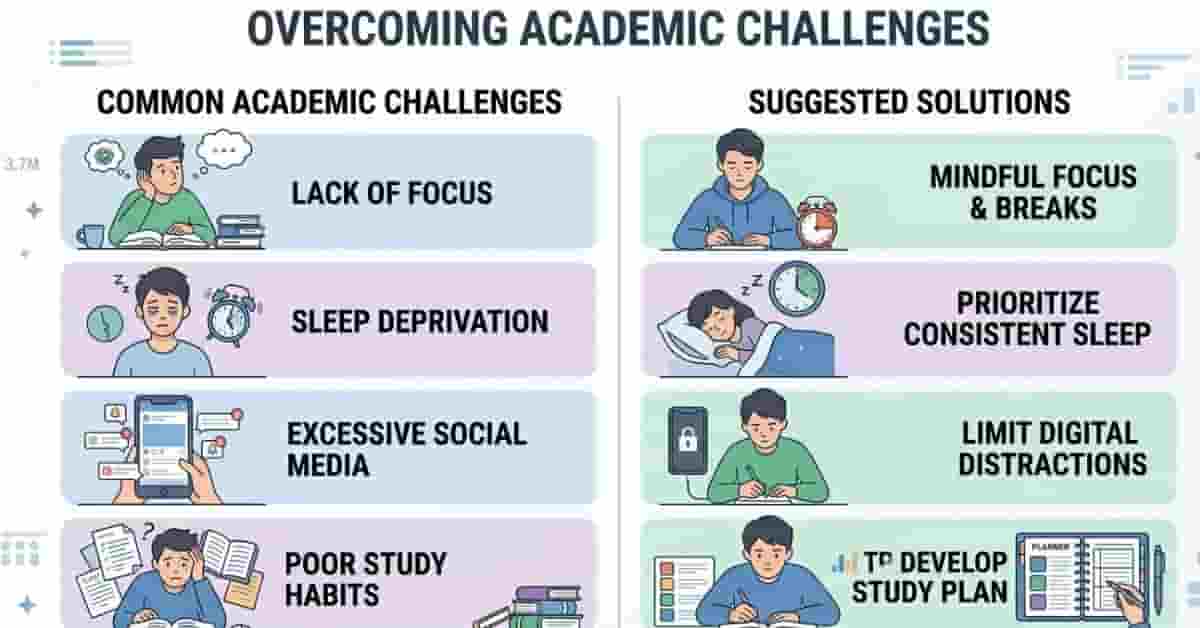
Many students want better grades but face obstacles that slow their progress. These challenges often lead to poor academic performance, even when students try to work harder.
The key is identifying the root problem. Once you understand what is affecting your focus or productivity, it becomes easier to apply the right solution. Most academic struggles come from daily habits rather than ability.
To address these issues, explore the common challenges below and consider proven solutions for each.
Lack of Focus During Study Time
Distractions make it difficult to stay focused while studying. Phones, background noise, and multitasking often interrupt concentration.
When focus drops, learning slows and becomes less effective. Students may spend hours studying, but remember very little.
To improve concentration:
- Study in a quiet, distraction-free space
- Keep your phone out of reach while studying.
- Break study time into shorter sessions
- Use a timer to stay on track.
- Review your goals before each study session.
Pro Tip: Try the “Pomodoro method.” Study for 25 minutes, then take a 5-minute break. This helps maintain focus.
Sleep Deprivation and Fatigue
Many students sacrifice sleep to finish homework or prepare for exams. While this may seem helpful, it often reduces memory and concentration.
Lack of sleep can lead to poor academic performance because the brain needs rest to process information.
Healthy sleep habits include:
- Getting 7–9 hours of sleep each night
- Avoiding screens before bedtime
- Maintaining a consistent sleep schedule
- Studying earlier in the evening when possible
Mini Insight :
Students who improve sleep routines often notice better concentration and stronger exam performance within weeks.
Excessive Social Media and Digital Distractions
Social media platforms can easily consume study time. Quick phone checks often turn into long distractions.
When students constantly switch attention, the brain struggles to retain information.
To reduce digital distractions:
- Turn off social media notifications during study time.
- Use website blockers if needed.
- Set specific times to check messages
- Keep your phone in another room while studying.
These small changes can significantly improve productivity and support better learning.
Poor Study Habits
Some students study for long hours but use ineffective methods. Passive reading or last-minute cramming rarely leads to strong results.
Improving study habits is essential for improving academic performance.
Better approaches include:
- Practicing active recall
- Using spaced repetition for revision
- Summarizing concepts in your own words
- Testing yourself regularly
- Reviewing mistakes after exams
Pro Tip: Focus on understanding concepts rather than memorizing answers. Deep learning leads to long-term enhancement of academic performance.
Key Takeaways
- Many academic struggles come from daily habits rather than ability.
- Distractions, lack of sleep, and poor study habits often lead to poor academic performance.
- Small changes in routine can quickly improve productivity and learning.
- Identifying the main challenge helps students choose the right improvement strategy.
Using Feedback and Self-Assessment
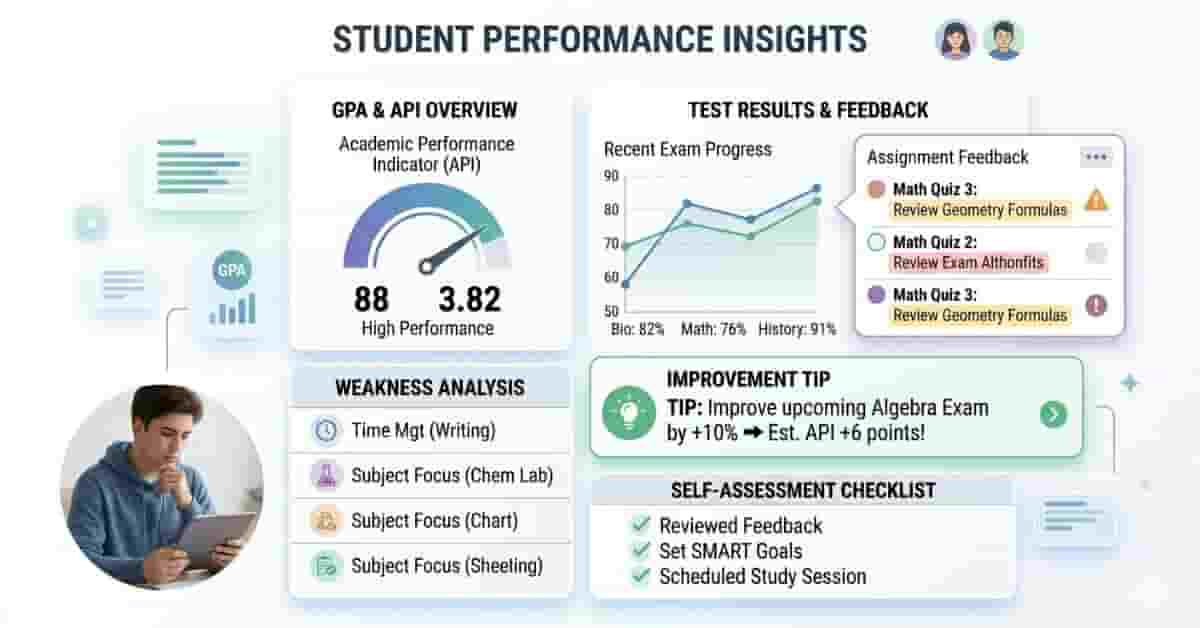
Do you focus only on final grades? You improve when you review feedback and learn from mistakes. Teachers’ comments, test results, and assignment scores reveal insights about your learning progress.
When students carefully analyze feedback, what patterns do they discover in their performance? Are exam scores lower than assignments? Do certain topics appear repeatedly in mistakes? How might identifying these patterns help guide improvements in academic performance?
Have you reviewed your recent tests and assignments? Can you identify which questions you answered incorrectly and understand why? Was it a lack of preparation, misunderstanding the concept, or rushing during the exam?
Could you use performance tracking tools to evaluate your progress? For example, how might an Academic Performance Indicator (API) Calculator, which combines GPA, exams, assignments, and attendance into one score, help you? How do small improvements affect your overall performance?
Consider this simple example.
| Component | Weight | Current Score | Improved Score |
|---|---|---|---|
| GPA | 40% | 3.4 | 3.4 |
| Exams | 30% | 75% | 85% |
| Assignments | 20% | 88% | 88% |
| Attendance | 10% | 92% | 92% |
| API Score | 100% | 81 / 100 | ~87 / 100 |
What happens if you improve your exam scores by about 10%? In this example, the overall API score increases by roughly 6 points. Do you see how small changes can create noticeable results over time?
Do you regularly review feedback? Have you found that self-assessment helps you adjust study methods, focus on weak subjects, and prepare more effectively for future exams?
Key Takeaways
- Feedback reveals important clues about your learning gaps.
- Reviewing mistakes helps students correct weak study habits.
- Tools like an API Calculator show how improvements affect overall performance.
- Even small score increases can lead to significant improvements in academic performance.
Monitoring Progress & Adjusting Strategies
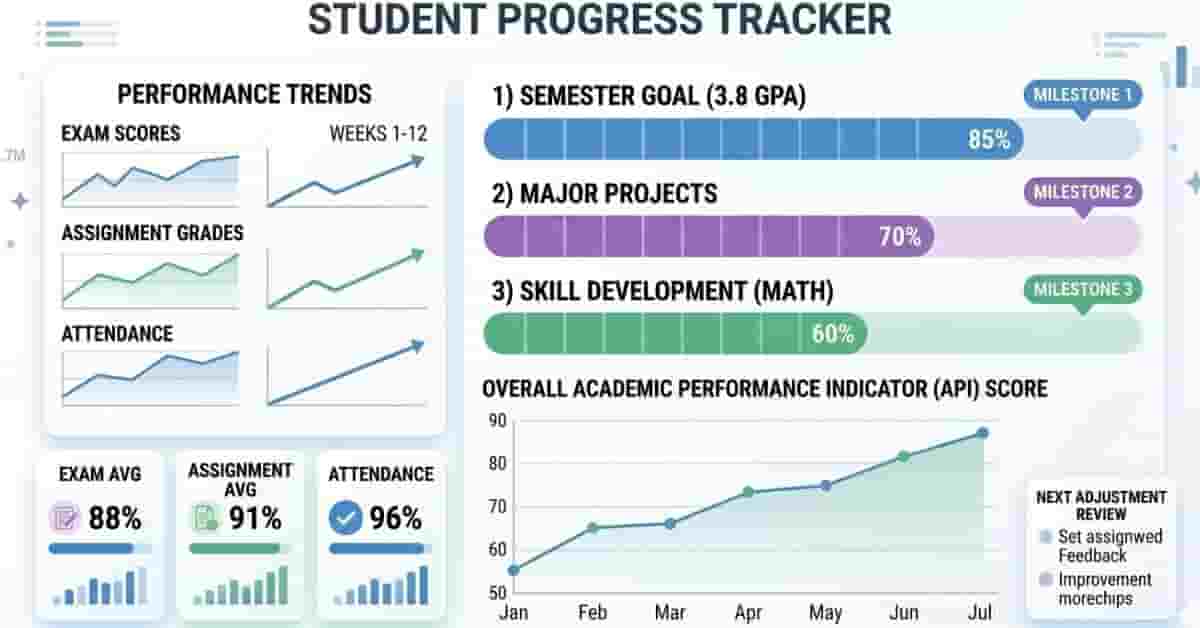
Improving grades is not a one-time effort. Students need to regularly track their progress and adjust their study strategies when needed. Monitoring results helps you understand whether your current habits are working.
Try keeping a simple grade log to celebrate your wins and spot areas for improvement. Recording your quiz, assignment, and exam scores lets you watch your progress unfold. Notice rising scores as proof that your efforts are working. If they level off, you can confidently choose new tactics to boost results.
Another helpful tool is an Academic Performance Indicator (API) Calculator. This calculator combines GPA, exams, assignments, and attendance into a single score. By regularly updating the numbers, students can see how small changes affect their overall performance. This type of tracking supports long-term improvements in academic performance.
Aim for small, steady wins rather than chasing perfection. Every point gained in an exam boosts your overall performance and brings you closer to your academic goals. Over time, these victories add up to a record of real achievement.
Students can monitor progress effectively by following simple steps:
- Record grades after each test or assignment
- Review performance weekly or monthly.
- Identify subjects that need extra practice.
- Adjust study time based on weak areas.
- Set short-term improvement goals.
Expert Tip :
Many thriving students make it a habit to review their progress every Sunday evening. This powerful routine sets their intentions and keeps them focused for a successful week ahead.
Tracking your growth fuels motivation. Every little improvement is proof that consistent effort matters. Celebrate these wins—they inspire you to keep building strong study routines!
Key Takeaways
- Monitoring progress helps students understand what strategies work best.
- Grade logs and API calculators make improvement measurable.
- Small, consistent changes lead to strong long-term academic results.
- Regular reviews help students adjust strategies quickly.
Conclusion
Improving academic performance starts with understanding your current results and applying practical strategies. This guide covered time management, effective study techniques, goal setting, healthy habits, and using tools like the API Calculator to track progress. By focusing on small, consistent changes, students can overcome common challenges such as distractions, poor study habits, or low motivation. Regular self-assessment and feedback help pinpoint weak areas and support academic performance improvement over time.
Remember, every small step counts. Even minor improvements in exams, assignments, or attendance can significantly boost overall performance.
Many institutions use the Academic Performance Indicator framework to track improvement.
Start improving your grades today—try our free Academic Performance Calculator and see how small changes can boost your overall performance. 🚀

Team ClassRank builds smart, student-friendly calculators to make grade and rank tracking simple and accurate. For questions or feedback, contact us at classrankcalculator@gmail.com.