
Introduction
Have you ever wondered why some students succeed easily while others struggle in the same classroom?
Understanding students’ academic performance is key to answering that question. In the United States, teachers, parents, and schools track performance in many ways. Grades matter, but they do not tell the full story. Skills, participation, and daily learning habits also shape how well a student performs.
Schools often review a student’s current levels of academic achievement and functional performance to understand a student’s true progress. This approach looks beyond test scores. It also measures how students apply knowledge in real situations, such as projects, teamwork, and classroom engagement.
Knowing these performance levels enables parents and educators to support students more effectively. It also helps students recognize their strengths and areas that need improvement.This guide covers what academic performance means, how schools measure it, and why functional performance matters. We’ll also review achievement levels, classroom examples, and strategies to help students improve.
Want a quick way to understand your student’s progress?
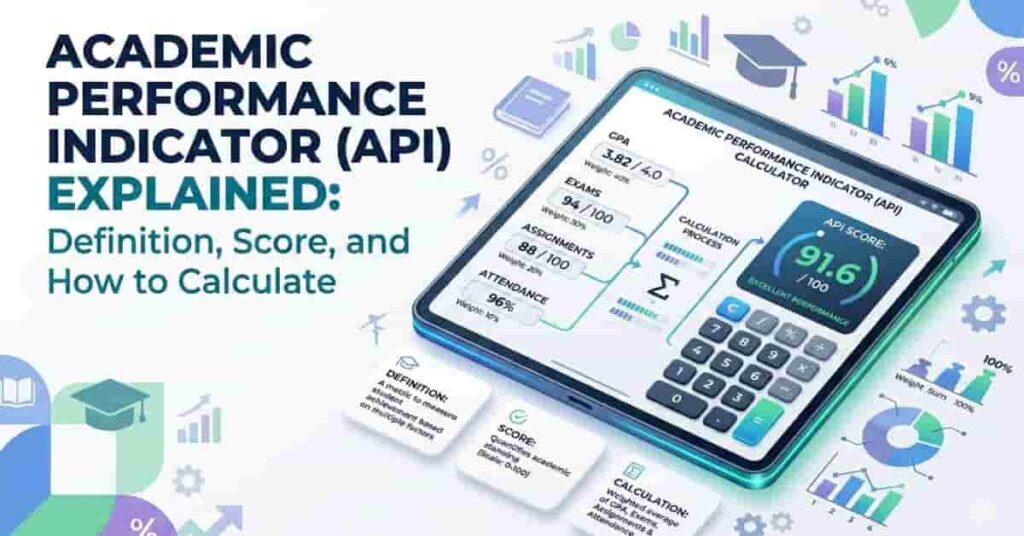
Try our Academic Performance Calculator to estimate grades, participation, and overall performance in seconds. Schools use different methods used to measure student academic performance depending on the curriculum.
By the end, you will have a clear understanding of how student performance works and how to track it more effectively.
What is Academic Performance in Students?
Academic performance in students describes how well a student learns, understands, and applies school subjects. It reflects progress in areas like reading, math, science, and writing. Schools in the United States use different indicators to measure this progress.
Most people think academic performance only means grades. In reality, it includes several learning behaviors and skills. Teachers often look at a student’s current level of academic achievement and functional performance to understand a student’s overall progress.
Academic performance helps educators answer important questions. Is the student understanding the lessons? Are they participating in class activities? Can they apply knowledge in real situations?
When teachers review these areas together, they gain a clearer picture of student learning. This helps schools provide better support and track improvement over time.
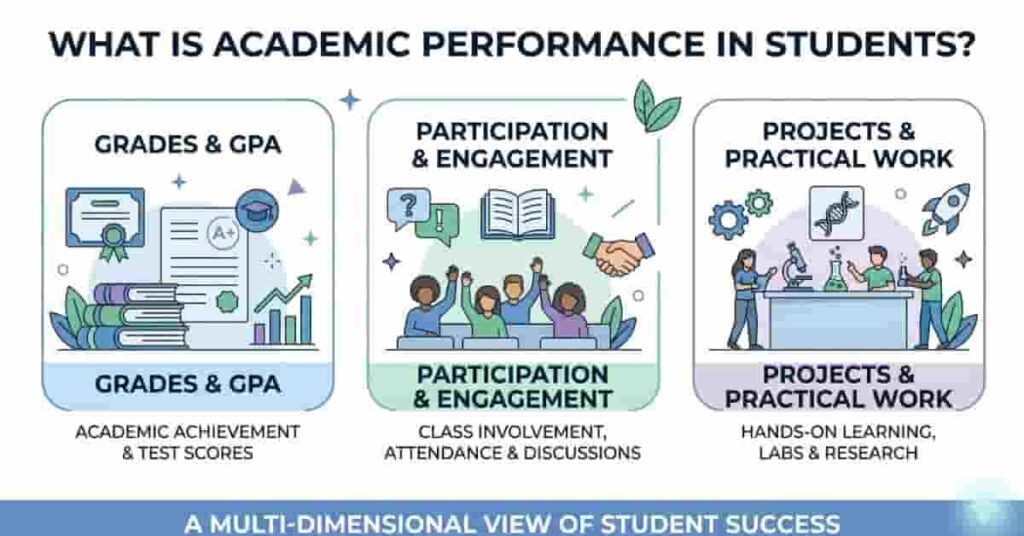
Key Dimensions of Academic Performance
Student performance usually includes multiple learning dimensions. These factors work together to show how well a student is progressing.
Grades and GPA
Grades and GPA measure how well a student performs on tests, quizzes, and assignments. These scores help schools track academic achievement across subjects.
Participation and Engagement
Active participation shows that a student is involved in learning. Asking questions, joining discussions, and completing class activities all matter.
Projects and Practical Work
Projects allow students to apply knowledge in real situations. Group projects, presentations, and research assignments often reveal a deeper understanding.
Together, these areas create a more accurate view of student learning. Teachers use them to evaluate both academic knowledge and classroom engagement.
Takeaways
- Academic performance reflects how well a student learns and applies knowledge.
- Grades alone do not define student success.
- Participation and projects also show learning progress.
- Schools often review multiple indicators to measure student growth.
Pro Tip
Teachers often notice improvement when students focus on consistent habits. Regular homework, class participation, and project effort can greatly improve academic performance.
Mini Case Example
A middle school teacher noticed two students with similar test scores. One actively joined discussions and completed projects well. The other rarely participated. The first student showed stronger overall academic performance because engagement supported deeper learning. Students looking to grow academically can follow practical tips to improve academic performance.
Levels of Academic Achievement
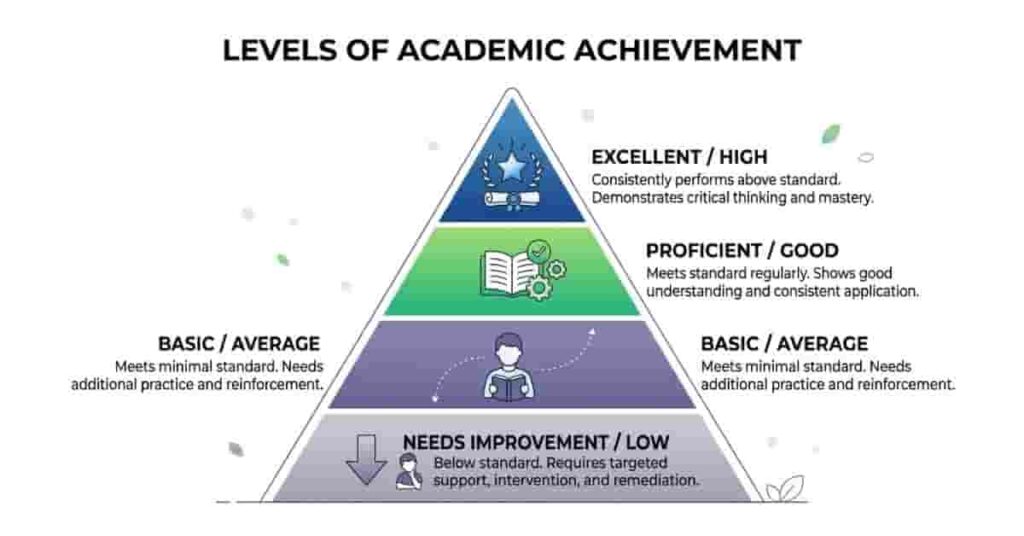
Schools often group students’ academic performance into clear achievement levels. These levels let teachers gauge how well a student meets learning goals. They also let parents and students track progress more clearly.
Educators review both grades and classroom behavior to assign these levels. In many cases, schools also evaluate present academic achievement and functional performance to assess progress.
Achievement levels identify strengths and support needs, not label students. This helps teachers adjust instruction and guide student improvement.
Excellent / High
Students in the excellent level show a strong understanding of their subjects. They complete assignments on time and perform well on tests.
These students often go beyond basic requirements. They actively participate in class discussions and demonstrate strong problem-solving skills. Their learning outcomes usually exceed grade-level expectations.
Proficient / Good
A proficient student meets most academic expectations. They understand the main concepts taught in class and apply them correctly.
Grades are usually above average, and participation is consistent. These students show solid progress but may still have small gaps in certain topics.
Basic / Average
Students at the basic level show partial understanding of the material. They complete most assignments but may struggle with complex tasks.
Their grades usually meet minimum requirements. However, they often need extra practice to strengthen key concepts and skills.
Needs Improvement / Low
This level shows that a student struggles with subject material. Test scores, assignments, or participation often fall below expectations.
Teachers review present academic achievement and functional performance to find underlying causes. With targeted support, students can move to higher levels.
Takeaways
- Achievement levels help educators measure student learning outcomes.
- They show how well students meet grade-level expectations.
- Teachers use levels to find strengths and gaps in learning.
- Performance levels can change as students improve over time.
Pro Tip
Encourage students to regularly review teacher feedback. Small improvements in study habits can move performance to the next level.
Mini Case Example
A fourth-grade student scored average on math tests but struggled with word problems. The teacher provided targeted practice. Within a semester, the student moved from basic to proficient performance.
Functional Performance in Students
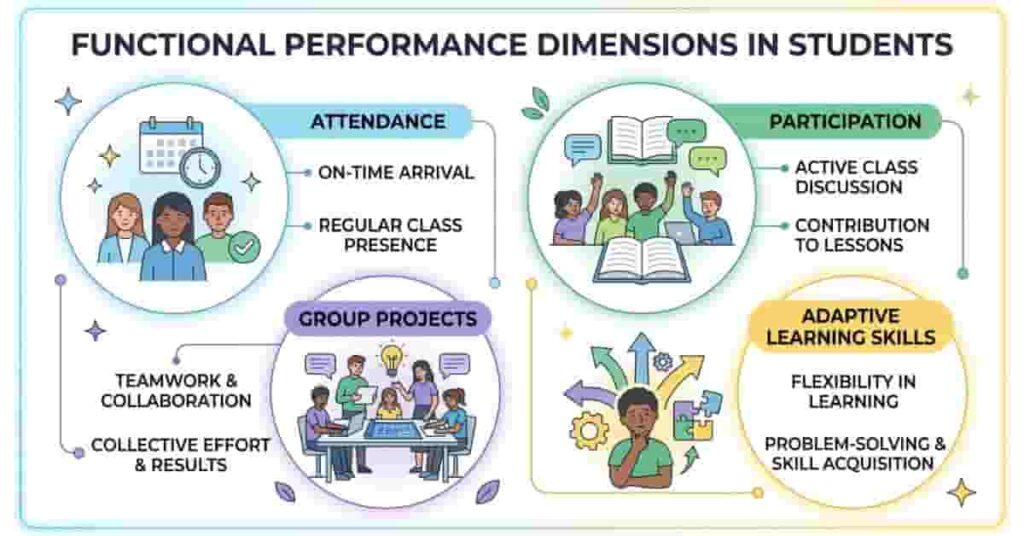
Functional performance shows how well a student uses knowledge and skills in everyday school activities. It focuses on practical learning, not just test results. In simple terms, it answers this question: Can the student apply what they learn in real situations?
To fully understand a student’s development, many U.S. schools review both academic progress and the present levels of academic achievement and functional performance. This combined focus helps teachers get a complete picture, especially in special education.
Students with an Individualized Education Program (IEP) often have detailed evaluations of functional performance. These reviews help teachers design learning plans that match the students’ strengths and challenges.
Because of its value in student learning plans, functional performance focuses on behaviors and skills that support learning. Understanding these factors is key, as they often influence a student’s overall academic success.
Examples of Functional Performance
To make this concept more concrete, functional performance includes several everyday learning behaviors. Teachers often observe these areas during normal classroom activities to gather useful insights.
Attendance and Consistency
Regular attendance helps students stay connected to lessons and classroom discussions. Missing classes can affect both understanding and participation.
Participation and Communication
Students who ask questions, share ideas, and join discussions often develop stronger learning skills. Participation also shows confidence and engagement.
Group Projects and Collaboration
Similarly, working in teams helps students apply knowledge in real situations. It also builds communication, responsibility, and problem-solving skills.
Adaptive Learning Skills
In addition, adaptive skills include time management, organization, and the ability to follow instructions. These habits help students complete tasks independently.
Taken together, these behaviors provide a clearer picture of how a student functions in the learning environment and help guide effective support. Functional performance shows how students apply knowledge in real classroom situations, beyond what is measured by tests.
- It includes participation, attendance, and practical learning behaviors.
- Schools often review functional performance alongside academic achievement.
- These insights help teachers support student learning more effectively.
Pro Tip
Teachers often notice improvement when students build strong routines. Simple habits, such as planning homework time, can improve functional performance.
Mini Case Example
A student understood science concepts but struggled with organization. After learning simple planning techniques, project completion improved significantly.
Measuring Academic Performance for Students
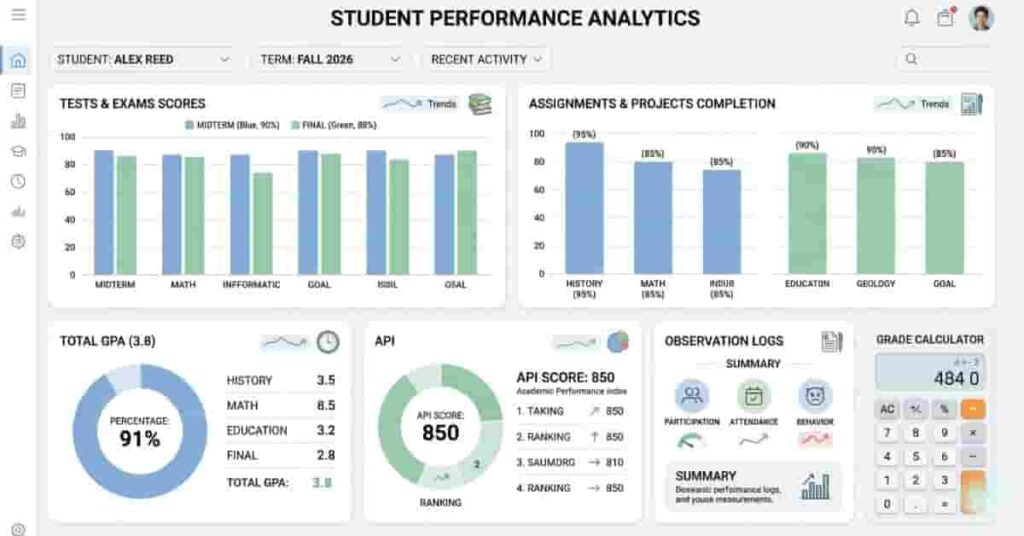
Schools use several tools to measure academic performance. These methods help teachers see how well students learn and apply knowledge. Instead of a single score, educators use multiple indicators to create a fuller picture of student progress.
Many schools review students’ current academic achievement and functional performance when evaluating them. This approach assesses both academic skills and daily learning behaviors.
By using diverse assessment tools, teachers monitor progress precisely. They also pinpoint learning gaps and offer targeted support when students need it.
Common Tools Schools Use
Teachers and schools utilize several strategies to gauge student performance.
Tests and Quizzes
Tests measure how well students comprehend lessons. Quizzes often assess short-term retention and let teachers verify daily understanding.
Assignments and Homework
Assignments let students reinforce classroom knowledge. Homework shows if students can apply skills independently.
Grades and GPA
Grades encapsulate student performance across disciplines. GPA provides a cumulative measure of academic achievement during a semester or school year.
API Score or Performance Indicators
Some schools or platforms use an Academic Performance Indicator (API). This score synthesizes multiple elements to indicate overall achievement.
Observation Logs
Teachers frequently document classroom conduct and participation. Their observations help assess engagement, effort, and study habits.
Using Tools to Track Progress
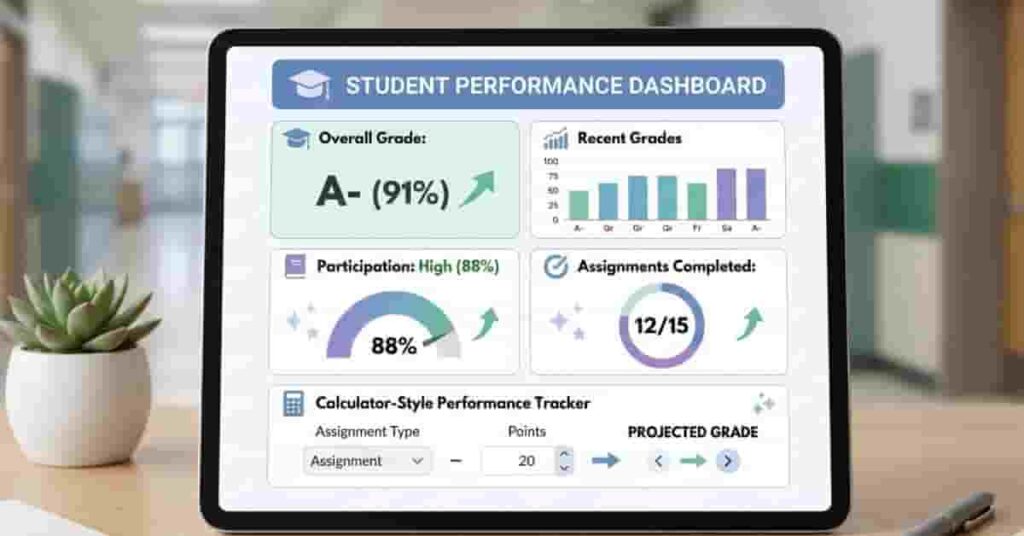
Students and educators regularly track progress to make better learning decisions. They use digital tools and calculators to simplify this process.
Students and parents use an API Calculator to estimate overall academic performance. These tools combine grades, attendance, and assignments to give a quick overview of performance.
Takeaways
- Schools measure academic performance with multiple tools.
- Tests, assignments, and GPA provide academic data.
- Observation logs reveal engagement and classroom behavior.
- Combining these tools allows teachers to see a more accurate view of student progress.
Pro Tip
Students who track their scores regularly often improve faster. By monitoring their progress, they identify problems before their grades drop.
Mini Case Example
A high school student noticed declining quiz scores but strong project grades. After reviewing results, the student improved their study habits and test performance.
Factors Affecting Student Academic Performance
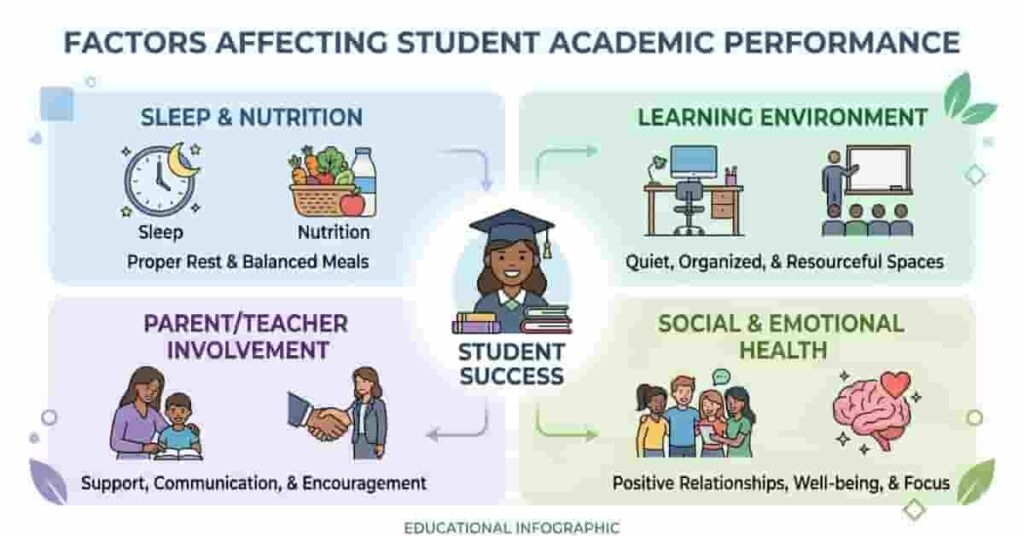
Many factors influence students’ academic performance. Learning success does not depend solely on intelligence. Daily habits, support systems, and emotional well-being also shape how students perform in school.
Educators often consider these influences when evaluating current levels of academic achievement and functional performance. Understanding these factors helps teachers and parents provide better support.
As a result, when students receive the right environment and guidance, their learning outcomes usually improve. Below are some of the most important factors that affect academic performance in schools across the United States.
Sleep and Nutrition
By playing a major role in learning, healthy routines set students up for success. Those who consistently sleep well often notice improved focus and memory during class.
Brain function is also supported by balanced nutrition. A student who starts the day with a healthy breakfast, for example, may stay more alert during morning lessons.
Learning Environment
Helping students stay motivated, a supportive learning environment matters both in the classroom and at home.
Concentration can improve with quiet study spaces, organized materials, and a positive classroom culture. To support student success, many schools across the U.S. encourage structured learning spaces.
Parent and Teacher Involvement
When adults remain involved, student performance often improves. Teachers guide academic progress, while parents reinforce learning at home.
For example, parents who check in on homework or chat about school help students stay motivated and on track.
Social and Emotional Health
Academic performance is strongly influenced by emotional well-being. Students who experience stress, anxiety, or lack of confidence may face reduced focus and motivation.
Counseling programs and school-based mentorship often support students through challenges. These resources help maintain healthy learning habits.
Takeaways
- Several personal and environmental factors shape student performance.
- Focus and memory are supported by healthy sleep and nutrition.
- Positive learning environments encourage motivation and engagement.
- Parent and teacher involvement improves learning outcomes.
- Emotional health also plays a key role in student success.
Pro Tip
Better results often come to students who create a consistent study routine. Even 30 minutes of focused daily study can improve performance.
Mini Case Example
After struggling with concentration in afternoon classes, a middle school student improved sleep and study habits—resulting in gradual grade improvement.
Tips for Supporting Students
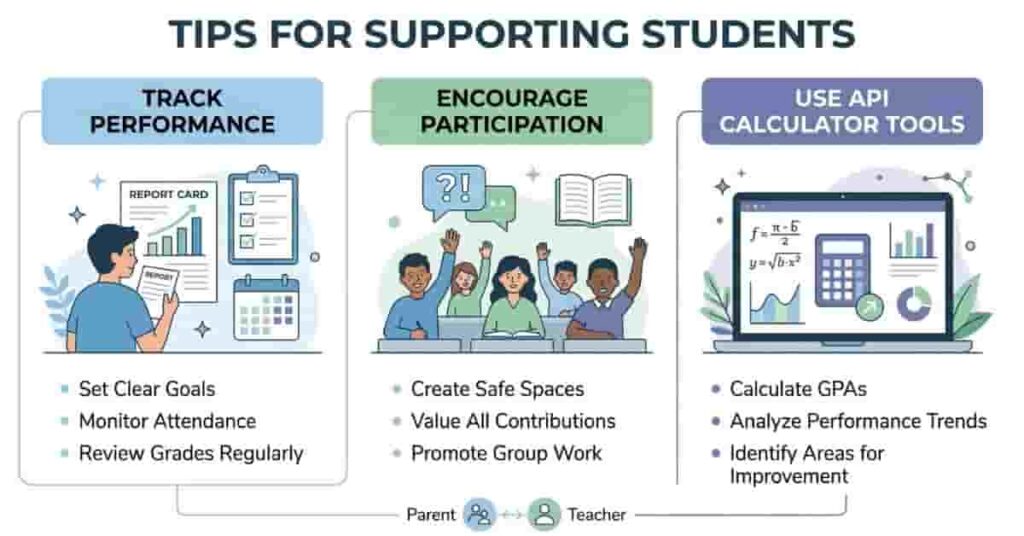
Supporting strong academic performance requires effective teamwork between parents, teachers, and students, with each playing a specific role. Parents offer support and structure at home, teachers provide instruction and feedback, and students engage with learning. Academic success grows when all three consistently offer guidance, encouragement, and monitoring.
Educators often review students’ current levels of academic achievement and functional performance to understand where students need help. Once these areas are clear, adults can provide the right support strategies. Furthermore, small habits and learning routines can make a big difference. When students feel supported, they often become more confident and motivated to improve. Performance Regularly
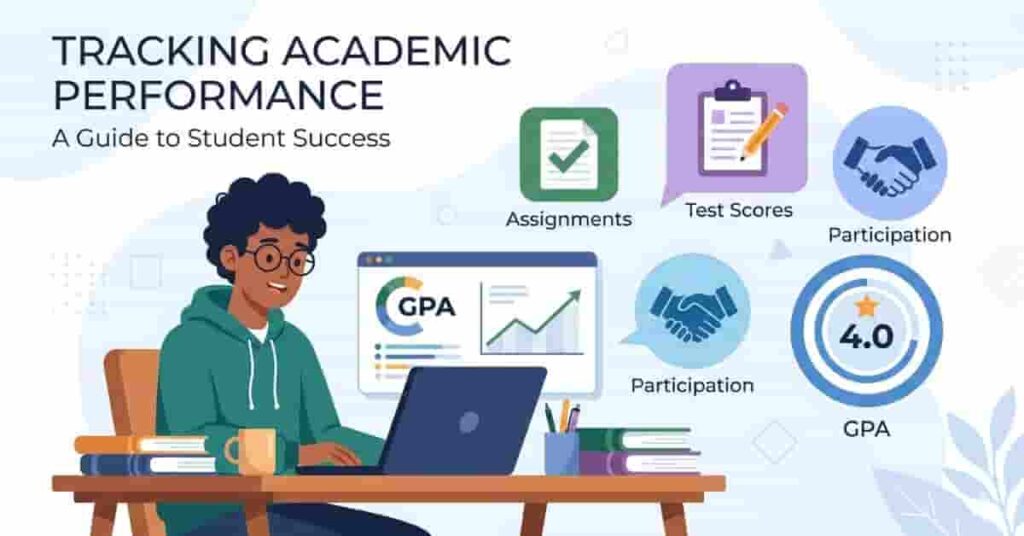
When students’ progress is tracked regularly, they gain insight into their development. Teachers can analyze tests, assignments, and class participation to spot important patterns.
By checking grades and school updates, parents stay involved and support student accountability. As students observe their own progress, their motivation is often boosted.
Using simple tools to monitor performance can make this process easier. For example, an API Calculator helps estimate overall academic performance by combining different learning indicators.
Encourage Active Learning and PaActive learners remember more. Don’t be shy—ask questions, share ideas, and dive into classroom discussions. discussions.
Teachers create interactive lessons to promote participation. At home, parents foster curiosity by encouraging conversations about school topics.
Activities like group discussions, presentations, and projects often help students understand concepts more deeply.
Use Tools and Calculators for Monitoring
Digital learning tools, such as calculators and academic trackers, make tracking progress more efficient. With immediate insights, both teachers and students can quickly understand performance trends.
Parents and students can use these tools to estimate scores and identify areas for improvement. When used regularly, they can guide better study habits and learning strategies.
Takeaways
- Regular performance tracking helps identify strengths and weaknesses. When you actively participate, you boost your understanding—and gain more confidence along the way!
- Support from parents and teachers encourages consistent progress.
- Academic tools can simplify monitoring and goal setting. Set small, fun academic goals each week. Achieving these mini-milestones boosts confidence and adds up to long-term success! performance.
high school student began checking weekly grades and participation scores. Within just one semester, the student felt more engaged in class—and saw impressive growth in overall performance! performance.
Conclusion
Understanding students’ academic performance involves more than grades. This article explored achievement levels, functional performance, and practical ways to track progress. We discussed how attendance, participation, projects, and daily habits all influence learning outcomes. Reviewing current levels of academic achievement and functional performance provides educators and parents with a clear picture of a student’s strengths and areas for improvement.
Consistent tracking, engagement, and targeted tools support student confidence and growth. Simple strategies like study routines and active participation make a lasting difference.
Tracking progress regularly helps students improve faster.
Check your student’s academic performance with our free Academic Performance Calculator and see where improvement is needed
Start improving student learning today. Use our free API Calculator now to check academic performance, set actionable goals, and drive meaningful progress.

Team ClassRank builds smart, student-friendly calculators to make grade and rank tracking simple and accurate. For questions or feedback, contact us at classrankcalculator@gmail.com.