

Table of Contents
Introduction
Why does your grade change even when you score well on a test? It feels confusing and frustrating. This is where understanding how weighted grades work becomes important for every student.
In many US high schools and colleges, grades are not all treated equally. Some assignments count more than others, which can confuse beginners. A small score in a final exam can impact your GPA more than several homework tasks. This often leads to stress, especially when students compare high school vs college grading systems. Many learners also struggle with GPA impact anxiety when results do not match their expectations.
This article breaks everything down simply. You will learn how teachers calculate weighted grades and why different categories have different importance. You will also understand real examples from school and college systems.
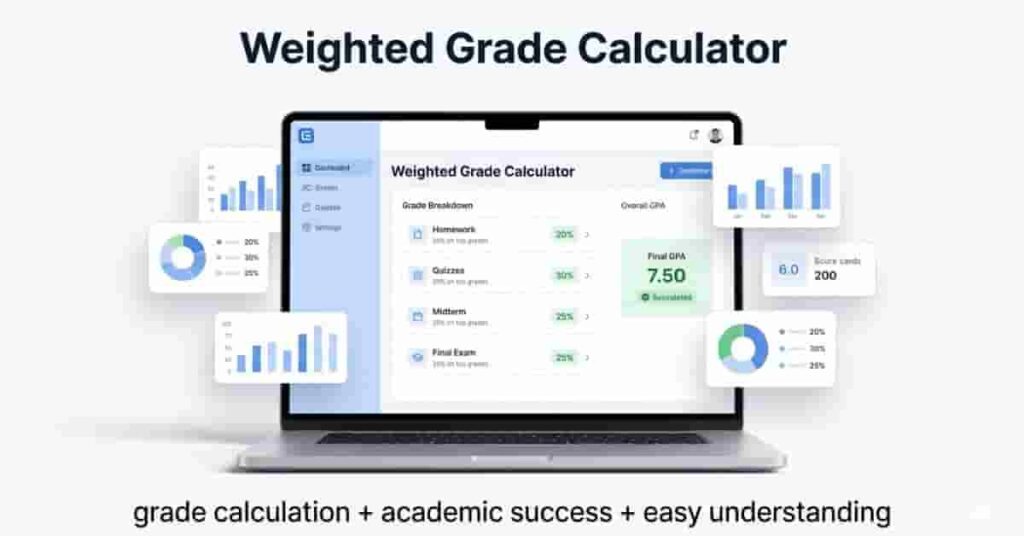
Instead of guessing your results, you can calculate your exact grade using a weighted grade calculator. It helps you see your true performance clearly and plan your next steps with confidence.
What Are Weighted Grades?
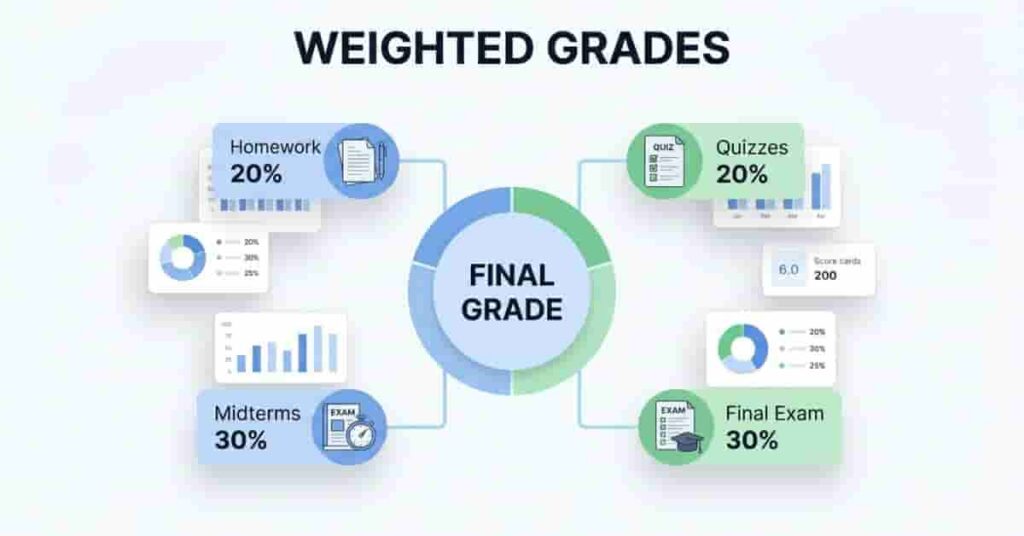
Weighted grades mean your final grade depends on the relative importance of each category. Some tasks carry more weight than others. Teachers assign different percentages to homework, quizzes, midterms, and final exams.
Not all assignments affect your grade equally. A small homework task may only change your score a little. But a final exam can strongly impact your overall result. This system helps schools measure performance more fairly.
Common grading categories include homework, quizzes, class participation, midterms, and final exams. Each category has a fixed weight, and your performance in each one contributes differently to your final grade. For example, exams usually carry more weight than daily assignments.
Weighted grades are calculated by assigning different percentages (weights) to assignments, tests, and exams to determine the final grade.
Understanding this system is important because it helps students see where they should focus more effort. Instead of treating all tasks equally, you can prioritize high-impact categories and improve your overall grade more effectively.
👉 Not sure what your final grade is? Use the Weighted Grade Calculator to instantly see your accurate result.
How Do Weighted Grades Work? (Step-by-Step Explanation)
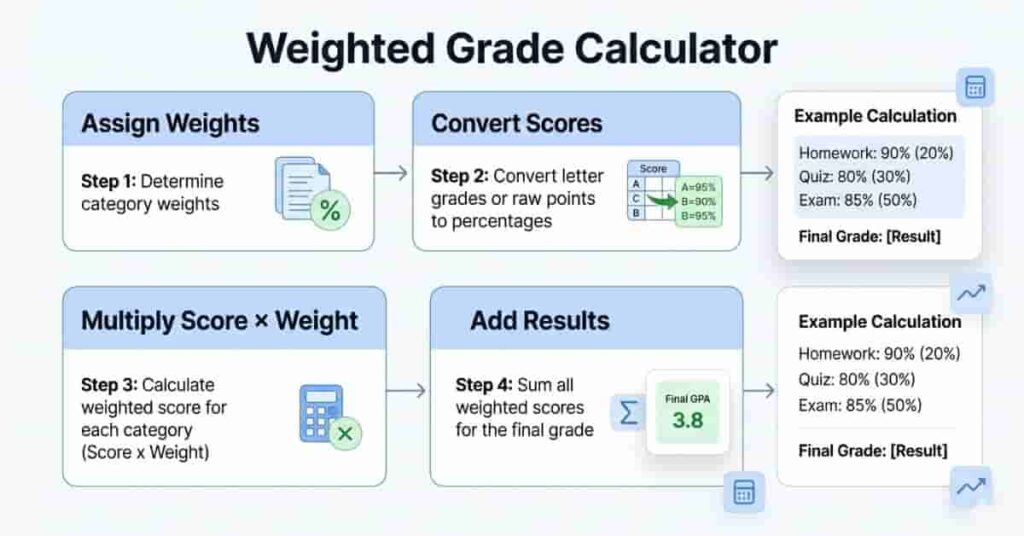
Understanding how weighted grades work becomes easy when you break it into simple steps. This system uses percentages to show how much each part of your course affects your final grade. Let’s go step by step so beginners can follow without confusion.
Step 1: Assign Weights
Each category gets a percentage based on importance. For example: Homework = 20%, Quizzes = 20%, Midterm = 30%, Final Exam = 30%. These weights must always add up to 100%.
Step 2: Convert Scores into Percentages
Next, you take your score from each category and convert it into a percentage if it is not already in that form. This makes the calculation consistent and fair across all tasks.
Step 3: Multiply Score × Weight
Now multiply each score by its weight. This shows how much each category contributes to your final grade. Heavier weights will have a bigger impact on your result.
Step 4: Add All Results
Finally, add all weighted results together to get your final grade. This gives you a clear and accurate overall score.
📊 Mini Example
Homework: 90 × 20%
Midterm: 80 × 30%
Final Exam: 85 × 30%
👉 Final grade calculation explained simply: each score contributes based on its importance, not equally. This is why some grades impact your result more than others.
How Teachers Calculate Weighted Grades
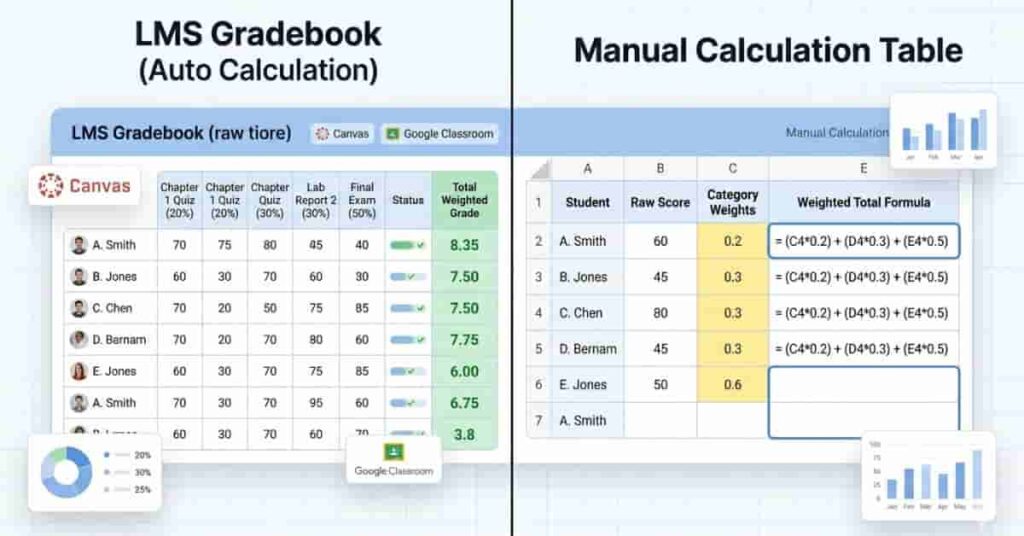
Teachers calculate weighted grades using a mix of digital systems and manual methods. The goal is to make grading fair and consistent for every student. When you understand how weighted grades work, you also understand why teachers structure grades this way.
Many schools use LMS platforms like Canvas or Google Classroom. These systems automatically calculate final grades based on category weights. Teachers simply enter scores, and the system handles the math. Some teachers still prefer manual calculation using spreadsheets to double-check results or adjust grading rules.
This process improves fairness in grading because every assignment follows the same rules. It reduces human error and keeps grading transparent for students. It also helps teachers manage large classes more efficiently.
💡 Important Insight:
Some teachers drop the lowest score to give students a fair chance. This helps balance out one bad test or assignment. In other cases, certain categories, such as final exams, carry more weight than quizzes or homework. This means your performance in high-weight tasks affects your grade more strongly.
Weighted Grades in High School vs College
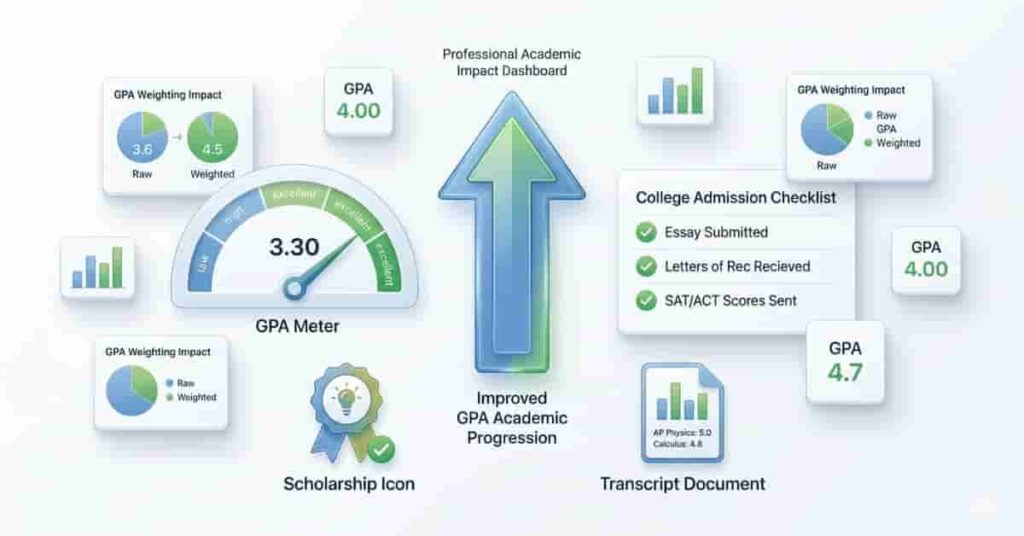
Understanding how weighted grades work becomes clearer when you compare high school and college systems. Both use weighted grading, but the structure and impact are very different. This difference often confuses students when they move from school to university.
🎓 High School
High school grading systems are usually simpler. Teachers use fewer categories, such as homework, quizzes, tests, and participation. Each category is more balanced, so no single task completely controls your final grade. This helps students stay consistent throughout the semester.
In most cases, high school grading feels more forgiving. A low score in one area can often be balanced by better performance in others. This makes it easier for beginners to track progress and improve over time.
🎓 College
College grading is stricter and more performance-focused. Courses often include fewer assignments, but each one carries more weight. Final exams usually have a much higher percentage compared to high school.
Because of this structure, your GPA impact becomes stronger in college. A single low exam score can significantly affect your final grade. This is why students need to carefully track weighted grades and plan their study strategies early in the semester.
Why Weighted Grades Matter
How weighted grades work is important because it directly affects your academic future. These grades are not just numbers. They shape your GPA and long-term opportunities in school and college.
One of the biggest impacts is on your GPA. Since some assignments carry more weight, your final score can change quickly based on performance in high-value tasks like exams. This means a small mistake in a major test can lower your overall grade more than several small assignments.
Weighted grades also affect scholarships. Many scholarship programs require a high GPA. A higher or lower GPA can decide whether you qualify for financial support or not.
They also play a major role in college admission decisions. Schools review your transcript to understand your academic consistency and performance across weighted subjects. Strong weighted grades show discipline and subject understanding.
Finally, weighted grades appear on your final transcript. This record stays with you and can influence future education or career opportunities. That is why understanding this system early helps you make smarter study decisions.
Common Mistakes Students Make
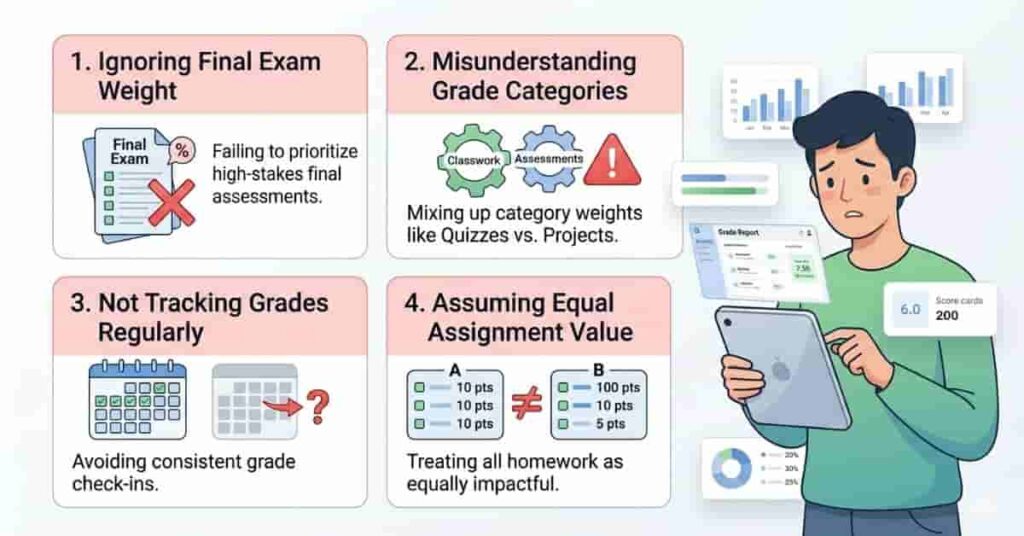
Many students struggle with weighted grading because they misunderstand how each category affects their final score. These small mistakes can lead to a lower GPA than expected, even when effort is consistent.
One common mistake is ignoring the final exam weight. Students often focus on daily homework and quizzes, but the final exam can carry the highest percentage. If you do poorly here, it can heavily impact your overall grade.
Another mistake is misunderstanding category importance. Not all assignments are equal, but students sometimes treat them the same. This leads to poor time management and less focus on high-priority tasks.
Many students also fail to properly track their current grade. Without regular checking, it becomes hard to know where you stand in the course. This can create surprises at the end of the semester when final grades are released.
Some students also assume all assignments affect the grade equally. This is one of the biggest misconceptions in weighted grading systems. In reality, each category has a different impact, and understanding this difference is key to improving performance.
How to Improve Your Weighted Grade
Improving your grade becomes much easier when you understand how weighted grades work. The key is to focus on the areas that have the greatest impact on your final score, rather than treating every task equally.
Start by focusing on high-weight tasks. Exams and major tests usually carry a higher percentage than homework, so improving performance in these areas gives faster grade improvement. Small improvements in high-weight categories can change your overall grade more than many small assignments.
Next, improve your exam preparation. Create a study plan early and focus on weak topics. Since exams often have the highest weight, better preparation directly improves your final result and GPA.
It is also important to regularly track your grades. Checking your current standing helps you understand where you are losing points. This allows you to adjust your effort before the final exam instead of reacting at the end.
Finally, use a calculator for planning. A weighted grade calculator helps you test different score scenarios. You can see what score you need on your final exam to reach your target grade and plan your study strategy with confidence.
👉 Want to improve your GPA? Try the Weighted Grade Calculator and find out what you need on your final exam.
Example Scenarios (Real Student Use Cases)
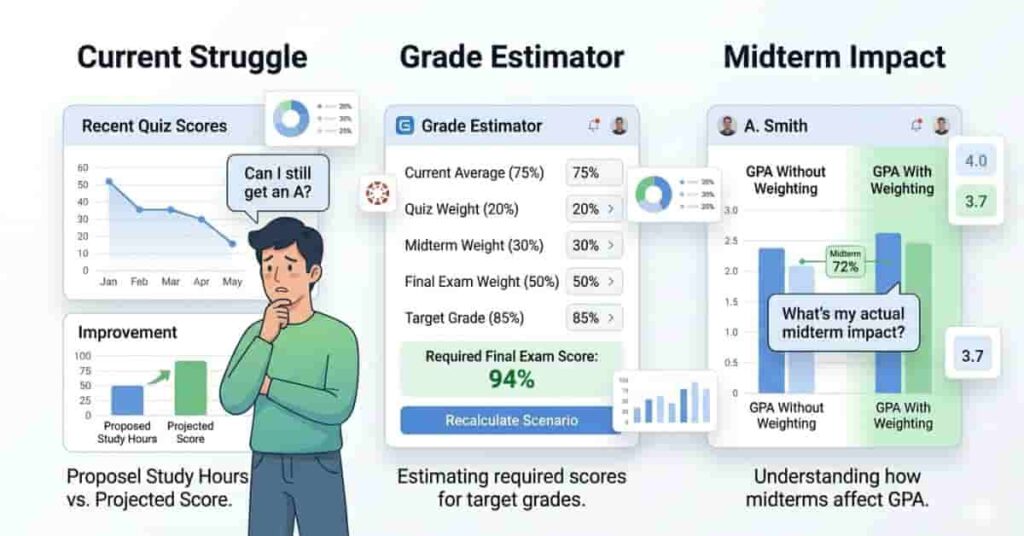
Understanding how weighted grades work becomes much easier when you see real student situations. These examples show how small changes in one category can strongly affect your final grade. Many high school and college students face these same questions during the semester.
Scenario 1: “I got low quiz scores — can I still get an A?”
Yes, it is often possible. Quizzes usually have a lower weight compared to exams or midterms. If your high-weight categories, like midterms and final exams, are strong, you can still reach an A. The key is improving performance in remaining high-impact tasks.
Scenario 2: “What do I need on the final exam to pass?”
This depends on your current weighted score and exam weight. If your final exam carries a high percentage, even a small improvement can help you pass. Students often use a weighted grade calculator to find the exact score they need.
Scenario 3: “How much does the midterm affect my GPA?”
Midterms usually have medium to high weight, depending on the course structure. A strong midterm score can boost your GPA significantly, while a low score can bring it down. This is why early preparation is very important in weighted systems.
Weighted Grades Formula (Simple View)
The weighted grade formula helps you understand exactly how your final grade is calculated. It may look technical, but the idea is very simple. Each score is multiplied by its weight, then all results are added together.
Here is the basic formula:
(Score × Weight) + (Score × Weight) + (Score × Weight) = Final Grade
Each part of your course contributes differently. A high-weight category, like a final exam, will affect your grade more than a low-weight task like homework. This is why understanding how weighted grades work is important for planning your study effort.
For example, if homework is 20%, midterm is 30%, and final exam is 30%, each score is multiplied by its percentage. Then all values are added to get your final result. This gives a fair and balanced overall grade based on performance across the course.
The key idea is simple. Your final grade is not based on one score. It is a combination of all scores, adjusted by importance.
Weighted vs Unweighted Grades
Understanding how weighted grades work becomes clearer when you compare them with unweighted grades. Both systems calculate performance, but they treat assignments very differently. This difference can affect your GPA and overall academic results.
In weighted grades, each assignment category has a different level of importance. Exams, quizzes, and homework do not carry equal value. Higher-weight tasks, like final exams, affect your grade more. This system gives a more detailed view of student performance and is commonly used in colleges.
In unweighted grades, all assignments are treated equally. Every task has the same value, no matter its difficulty or importance. This makes the system simpler, but it may not reflect true academic performance as accurately.
Weighted grading is more common in colleges because it gives a clearer picture of student’s ability. High schools sometimes use unweighted systems to keep grading simple and easier to understand.
In short, weighted grades emphasize importance, while unweighted grades emphasize simplicity.
Conclusion
We explored how weighted grading systems work and why they matter for students. You learned how different categories like exams, quizzes, and homework affect your final score. We also compared high school and college grading systems in a simple way.
Understanding how weighted grades work is important for managing your GPA. It helps you see which assignments matter most and where to focus your effort. With this knowledge, you can avoid common mistakes and make smarter academic decisions.
Instead of guessing your results, use a structured approach to track your progress. A clear understanding of the grading systems explained in this guide can improve your planning and confidence.
👉 Try the Weighted Grade Calculator to instantly see your result and plan your target grade. Share your experience or questions in the comments to help other students improve, too.

Team ClassRank builds smart, student-friendly calculators to make grade and rank tracking simple and accurate. For questions or feedback, contact us at classrankcalculator@gmail.com.