
Introduction
How do you know if a student is truly doing well in school?
Many students think grades alone show success. In reality, schools use several tools to evaluate learning and progress. Tests, assignments, participation, and GPA all help build a fuller picture. Educators often combine these results into an academic performance measure to track overall achievement.
In the United States, schools rely on different systems to evaluate performance. These may include an academic performance scale, GPA scores, and even an academic performance indicator score. Each method highlights different aspects of student learning and growth.
Understanding these measurement methods helps students stay on track and improve their results. It also helps teachers identify strengths, gaps, and areas that need extra support.
In this guide, you will learn how academic performance is measured using common scales, scores, and evaluation methods. You will also see simple calculation examples and learn how to estimate your own score using an academic performance calculator.
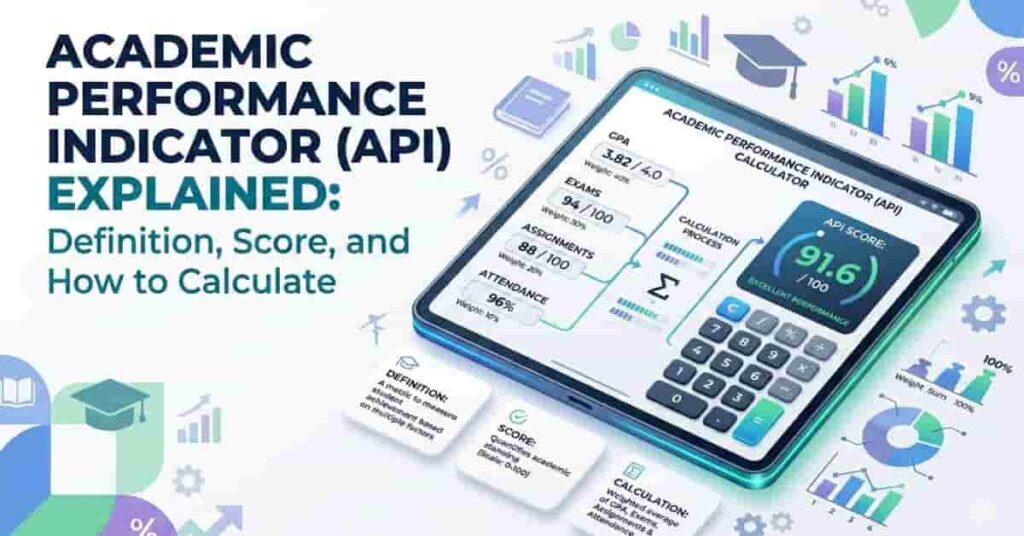
One widely used framework for evaluation is the Academic Performance Indicator model.
What Is Academic Performance Measurement?
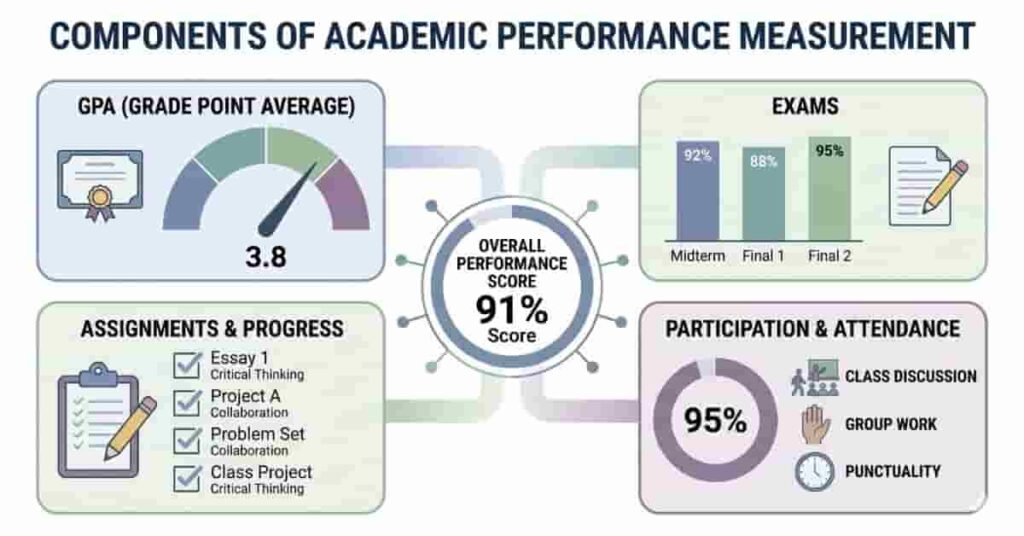
Have you ever wondered how schools know if students are really learning? An academic performance measure is one way to find out. It combines different learning indicators to create a clear picture of progress. Instead of relying on one test or grade, schools review several academic factors together.
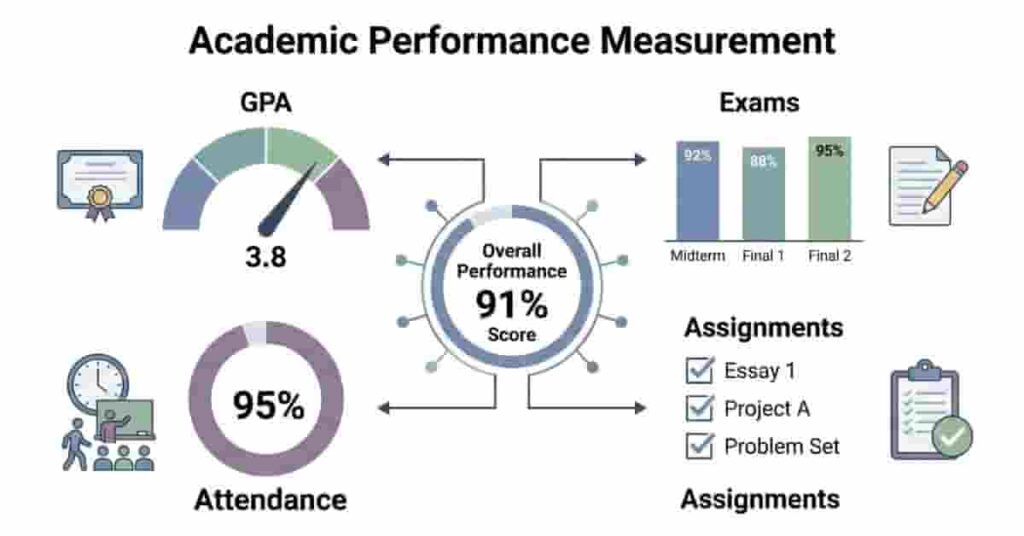
Think about your own experience—how many ways have you been evaluated in school? Most schools in the United States use multiple metrics to assess performance. These often include GPA, exam scores, assignments, class participation, and attendance. Each element contributes to the overall evaluation of a student. An academic performance scale organizes results into measurable scores. For example, GPA uses a 4.0 scale, while some systems use percentages. Teachers use these numbers to track improvement and spot gaps.t and identify learning gaps.
How does measuring your academic performance make a difference? It helps you see exactly where you stand. A clear score shows strengths, weaknesses, and areas that need improvement. When you see your progress in numbers, you can set realistic goals and plan better study strategies.
If you’re a teacher or advisor, consistent performance measurement can help you, too. It’s a valuable tool to evaluate teaching outcomes, compare results across classes, and provide targeted support to students who need it.
Takeaways
- An academic performance measure evaluates student learning using multiple indicators.
- Schools combine GPA, exams, assignments, and attendance to assess progress.
- An academic performance scale converts these indicators into clear scores.
- Measurement helps students set goals and helps teachers improve instruction.
Scales & Methods to Measure Academic Performance
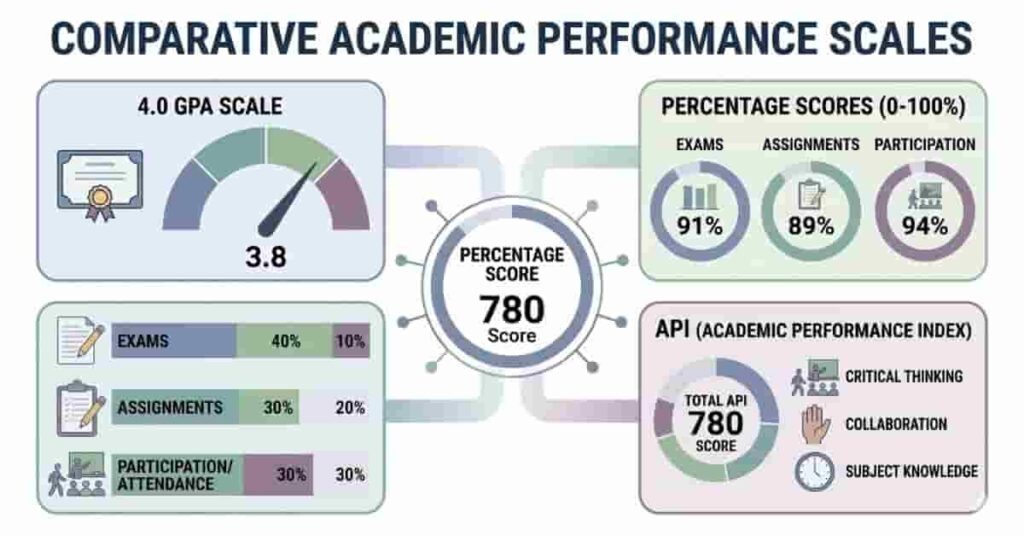
Schools use several systems to evaluate student success. Each academic performance scale converts learning results into clear scores. These scores help teachers, advisors, and students understand progress throughout the semester.
In the United States, educators often use multiple scales to measure different aspects of learning, such as exams, coursework, and participation.
Common Academic Performance Scales
1. GPA (Grade Point Average) The GPA scale is the most common system in US schools and colleges. It usually follows a 4.0 scale, where letter grades convert into numbers.
- A = 4.0
- B = 3.0
- C = 2.0
- D = 1.0
- F = 0.0
GPA summarizes overall academic performance in a single number.
2. Academic Performance Indicator (API) Some schools use weighted scoring models called academic performance index scores. These systems combine GPA, assignments, and exam results into a single performance indicator.
For example, a system may assign weights such as:
- GPA: 40%
- Assignments: 30%
- Exams: 30%
This method provides a broader view of student achievement.
3. Percentage or Numeric Scores Many classes also use percentage grades. Students receive scores like 85% on exams or 92% on projects. Teachers then convert these percentages into final grades or GPA values.
Evaluation Methods Used in Schools
Academic scales rely on several evaluation methods to collect performance data:
- Standardized tests: Measure subject knowledge using structured exams.
- Class assignments and projects: Evaluate understanding through coursework and practical tasks.
- Participation and functional performance: Assess engagement, discussion, and classroom involvement.
Combining these methods creates a balanced academic evaluation system. It helps educators measure knowledge, skills, and learning progress more accurately.
Takeaways
- Schools use multiple systems to measure student performance.
- GPA is the most common academic performance scale in US education.
- Weighted systems like academic performance indexes use several metrics.
- Tests, assignments, and participation all contribute to final performance results.
Example segments:
- GPA – 40%
- Assignments – 30%
- Exams – 30%
Once results are measured, students should focus on strategies for improving academic performance.
Calculating Academic Performance Score
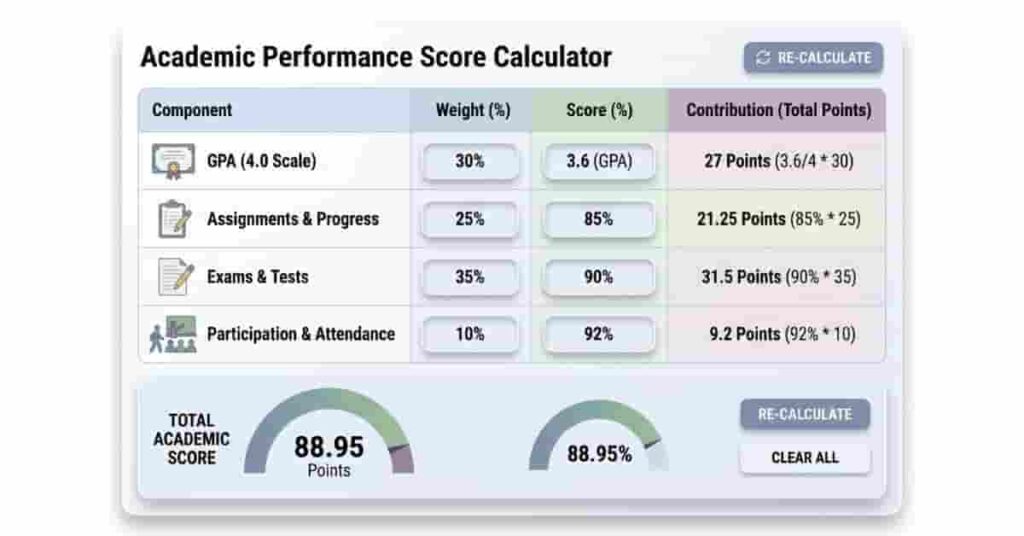
An academic performance score usually combines several key parts of your learning journey. Schools often assign special importance to things like your GPA, assignments, and exams. This method gives a well-rounded look at your hard work and results.
Here’s how it works: Each part gets a weight based on how important it is. You just multiply your score in each area by its weight. Add everything up, and you’ll see your final performance score!
Step-by-Step Calculation
Try these easy steps to estimate your academic performance score:
1. Find the parts you’ll be scored on. Most systems look at GPA, assignments, and exams.
2. Assign weights
Give each part a percentage weight. For example, your GPA might matter a bit more than your assignments.
Turn your scores into weighted contributions by multiplying each score by its weight.
4. Add all contributions
Add everything together, and you get your overall academic performance score!
Example Calculation
| Component | Weight | Score | Contribution |
|---|---|---|---|
| GPA | 40% | 3.6 | 36/40 |
| Assignments | 30% | 85% | 25.5/30 |
| Exams | 30% | 90% | 27/30 |
| Total Score | 100% | – | 88.5/100 |
Example: A student has a GPA of 90 (weighted 50%), an assignment average of 85 (weighted 20%), and an exam score of 88 (weighted 30%). Calculation: (90 × 0.5) + (85 × 0.2) + (88 × 0.3) = 45 + 17 + 26.4 = 88.4. The student’s academic performance score is 88.4 out of 100.
Many schools use similar methods when calculating academic performance index scores or weighted academic indicators. These systems help educators evaluate progress across different learning activities.
You can also estimate your results using a fun performance calculator. An Academic Performance Indicator Calculator can help you quickly find your score based on your GPA, exams, and assignments.
Takeaways
- Weighted scoring combines multiple academic indicators.
- GPA, assignments, and exams often contribute to the final score.
- Each component has a percentage weight in the academic performance scale.
- Adding all contributions produces the final academic performance result.
Flow example:
- GPA score → apply weight
- Assignment score → apply weight
- Exam score → apply weight
- Add results → final academic performance score.
Why Measuring Academic Performance Is Important
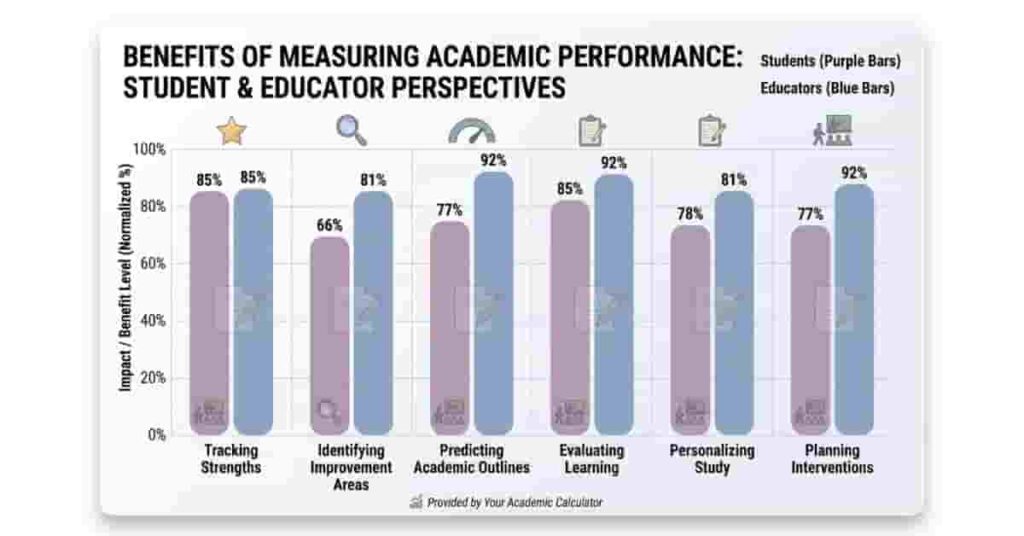
Measuring progress enables students and teachers to gauge learning effectively. A clear academic performance measure captures more than grades; it integrates multiple indicators to reflect a student’s understanding.
Schools frequently use an academic performance scale to translate results into definitive scores. These scores simplify progress comparison over time. Consistent measurement empowers students and educators to make informed academic decisions.
Benefits for Students
Regular performance measurement gives students insights into both strengths and areas needing improvement, helping them adjust study habits and set realistic goals.
Key benefits include:
- Tracking strengths and weaknesses: Students determine which subjects or skills require extra focus.
- Identifying areas to improve: Performance data uncovers gaps in understanding.
- Predicting future outcomes: Students can forecast their semester GPA or possible class rank.
- Setting realistic goals: Clear numbers make it easier to plan study strategies.
For example, a student who checks academic performance index scores may notice declining exam results. This realization prompts them to adapt study habits before the next test.
Benefits for Educators
Teachers and academic advisors depend on performance measurement systems. These tools enable them to assess learning in a systematic and equitable manner.
Important benefits include:
- Consistent academic indicators enable objective evaluation and clear insights into student progress.
- Better classroom insights: Scores expose trends across assignments, exams, and participation.
- Targeted support: Educators can detect struggling students early.
- Improved teaching strategies: Performance data helps refine lesson plans.
When both students and educators grasp performance metrics, academic planning becomes more strategic. Transparent measurement establishes a shared system that strengthens learning and long-term achievement.
Takeaways
- An academic performance measure offers a comprehensive view of student progress.
- Performance scales help convert learning outcomes into measurable scores.
- Students can leverage results to enhance study strategies and forecast outcomes.
- Educators use these insights to guide instruction and provide support.
Common Mistakes in Measuring Academic Performance
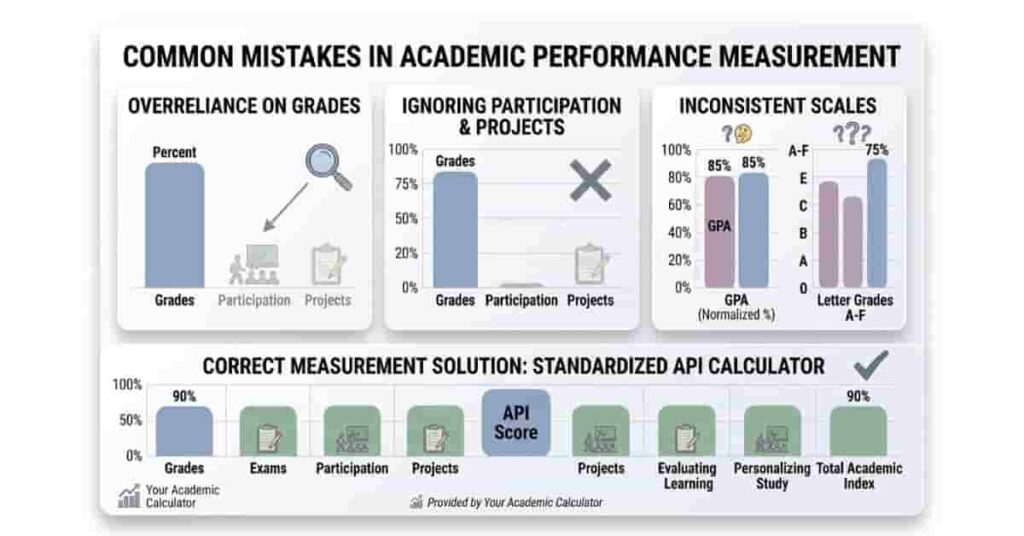
Schools often make mistakes when measuring student learning. These errors can lead to an incomplete academic performance measure. When schools rely on limited data or inconsistent scoring, the final results may not reflect a student’s true ability.
A balanced academic performance scale should include several learning factors. These factors help educators measure both knowledge and engagement in the classroom.
1. Relying Only on Grades
One common mistake is focusing only on test grades. Exams measure knowledge at a specific moment, but they do not show the full learning process.
Students may understand a topic well but perform poorly on one test. If schools rely only on exam grades, the final evaluation may miss important progress and effort.
2. Ignoring Participation, Projects, and Effort
Academic performance includes more than written tests. Participation, assignments, and projects also show how well students understand and apply knowledge.
For example, a student who contributes to discussions and completes projects carefully may show strong learning skills. Ignoring these factors can create an incomplete performance picture.
3. Using Inconsistent Scales or Unverified Scores
Another issue occurs when teachers use different scoring methods without clear standards. One class may use percentages, while another uses letter grades.
Without a consistent academic performance scale, comparing results becomes difficult. Students may also struggle to understand how their performance is calculated.
How an API Calculator Helps Standardize Scores
A structured system can reduce these problems. An Academic Performance Indicator (API) calculator combines multiple academic indicators into one score.
The calculator applies consistent weights to components such as GPA, assignments, and exams. This method helps create fair and transparent academic performance index scores.
Students can also use an API calculator to estimate their academic standing and track progress over time.
Takeaways
- Relying only on grades can create an incomplete evaluation.
- Participation, projects, and effort also reflect learning progress.
- Inconsistent scoring systems make results harder to compare.
- An API calculator standardizes calculations and improves accuracy.
Conclusion
Measuring student progress requires more than just looking at grades. A strong academic performance measure combines exams, assignments, GPA, and participation to show a complete learning picture. Using a structured academic performance scale helps students and educators track progress clearly. When performance is measured across several indicators, students can identify strengths and improve weaker areas. Teachers can also use these insights to support learning and guide academic development.
Understanding how academic scores work gives students more control over their results. It also helps them plan study strategies and predict future outcomes, such as GPA or class standing.
Different schools categorize results based on student academic performance levels.
If you want to estimate your own results, try a simple calculation tool. Try our Academic Performance Indicator Calculator to see your score and understand your current academic standing.

Team ClassRank builds smart, student-friendly calculators to make grade and rank tracking simple and accurate. For questions or feedback, contact us at classrankcalculator@gmail.com.